

Fourth Estate/Mitchell Richtmyre
The Patriots avoided a second straight loss with a rivalry winBY GABRIEL KING, SPORTS EDITOR
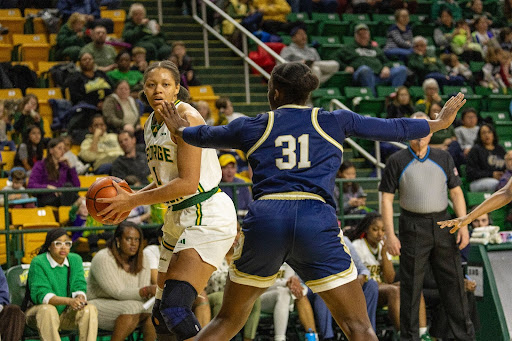
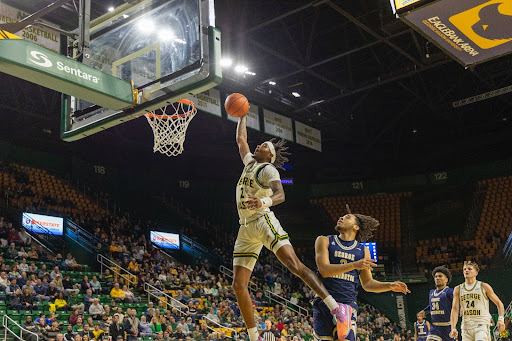
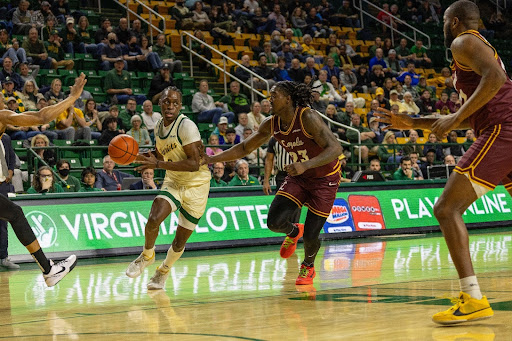
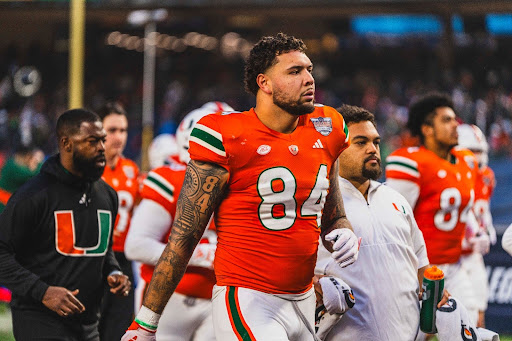
Following its midweek loss to Davidson, Mason women’s basketball defeated George Washington 60-57 on Saturday at EagleBank Arena. The Patriots (20-5, 11-3 Atlantic 10) are now 5-0 following losses this season.
“I thought this was a real gritty and resilient win for our program. We’ve been down some players due to injuries,” Head Coach Vanessa Blair-Lewis said. With the win, the Patriots sweep the season series against the Revolutionaries (10-16, 3-11) for the first time since 2019.
The Patriots were without Sonia Smith, their leading scorer, for the second straight game. Paula Suárez and Zahirah Walton returned after missing Wednesday’s loss at Davidson. Suárez scored 16 points and shot 4-5 from 3-point range in her return.
The Patriots started the game on a 9-0 run and led by as many as 16 points in the second quarter. The Revolutionaries stormed back to take a 46-45 lead at the end of the third quarter. In the fourth quarter, Mason held GW to 4-12 shooting to secure the victory.
Jazmyn Doster led Mason with a season-high 17 points on 8-14 shooting. The veteran center also grabbed eight rebounds for the Patriots. “[We’re] showing everyone in the conference that this is what we’re capable of. Not where our limit is, but what we’re capable of,” Doster said.
“Jazmyn was huge for our win tonight. After coming off just such a disappointing loss to Davidson, I really thought this was a team win, led by Jazmyn Doster,” Blair-Lewis said. Along with a season-high in points, Doster posted season highs in assists and field goals made.
The Revolutionaries’ second half run was led by 14 points and a game-high 15 rebounds from Mayowa Taiwo. Despite Taiwo’s performance, Mason outscored GW 15-11 in the fourth quarter to overcome the Revolutionaries’ run.
“We just wanted to make sure that we recovered and that we rebounded,” Blair-Lewis said. “And then on our end, we wanted to go inside to Jazmyn and get contact to be able to get to the free throw line.”
With the win, Mason remains in the top four of the A-10. The Patriots are still alive for the regular season A-10 championship, as they are two games back with four games remaining. Two of Mason’s remaining games are against fellow top-four teams, Richmond and VCU.
The Patriots will return to action on Wednesday at St. Bonaventure. Mason will then head home for a matchup with in-state rival and current A-10 leader Richmond on Feb. 24.
Fourth Estate/Andani Munkaila
DOE investigation raises First Amendment questions amidst pro-Palestine protests on campus.BY ERICA MUNISAR, EDITOR-IN-CHIEF
Editor’s Note: Fourth Estate uses language in accordance with AP style guidelines. For more information on the use of the “Israel-Hamas war”, please visit the AP Stylebook.
The full letters from the Department of Education, Virginia Attorney General Jason Miyares and Students For Justice in Palestine at George Mason University can be read below. A full transcript of the Feb. 7 Student Town Hall can be seen on Fourth Estate.
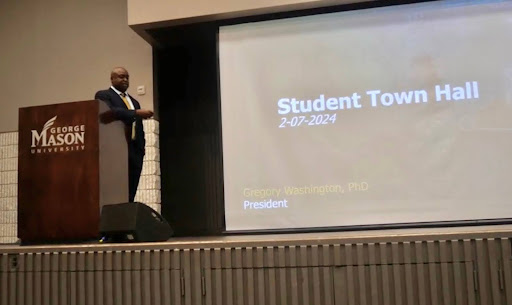
Since Dec. 22, George Mason University is currently under federal investigation for “Title VI – National Origin Discrimination Involving Religion” alongside 15 other pending investigations from previous years. In response, President Dr. Gregory Washington has attributed the recent investigation to his approval of pro-Palestine protests during a recent Student Town Hall on Feb. 7.
The investigation has raised discussion about free speech and the First Amendment, particularly in Virginia universities’ decisions to allow or disallow pro-Palestine protests as shown by letters from the Department of Education, Virginia Attorney General Jason Miyares and Students for Justice in Palestine at Mason, or SJP Mason.
During a Feb. 7 Student Town Hall hosted by University Life, nine out of 11 questions referenced the Israel-Hamas war and campus protests. At the Town Hall, Washington addressed concerns and shared a letter addressed to him by the Department of Education.
“Dear President Washington: The U.S. Department of Education, Office for Civil Rights (OCR) received a complaint on November 29, 2023, against George Mason University (University). The complaint alleged that the University discriminated against students on basis of national origin (shared Jewish ancestry) by failing to respond appropriately to incidents of harassment in October and November 2023,” Dan Greenspahn, Supervisory Attorney for the U.S. Department of Education Office for Civil Rights said.
Washington responded to the claim in his presentation by first addressing reports of antisemitism on campus. “We had more than 70 incident reports that came to our offices [which] were about instances of antisemitism… We’ve had now two confirmed assaults on students. Those were both to students of Jewish descent,” Washington said.
Washington then claimed that Mason is under federal investigation for allowing student protests. “We have received now hundreds of letters and calls, mostly angry, that we are allowing student protests and we are allowing our students to use hateful language… The reality of the situation is right now the university is under investigation by the Department of Education because we’ve allowed the protests to continue,” Washington said.
“Look, I have been asked on numerous occasions to stop the student protests. Even when you’re protesting against me, I still support it because I support freedom of speech,” Washington said.
Washington then claimed that other universities have shut down pro-Palestine protests over face coverings or experienced pushback due to allegations of hateful language.
He explained Mason’s new Concealment of Identity Policy, requiring students wearing face coverings to show ID to authorized officers if requested, is a method to enable protests without shutdowns. “That’s our way of meeting the spirit of the law while simultaneously allowing you to protest, and not doing what other institutions are doing when students show up in face masks and shut the whole protest down… You will see that we are actually supporting First Amendment speech more than you think.”
However, details as to how the Concealment of Identity Policy will be efficiently enforced within protest settings remain unclear as of Feb. 18.
Washington said that pushback against pro-Palestine protests is due to perceptions of the language used during the protests. “There’s a reason why people are angry and you’re seeing such a pushback [with shut down protests by other institutions]… When our students marched across campus and you use slogans like ‘from the river to the sea,’ we have other students who see that as the annihilation of their culture…,” Washington said.
In another letter provided during the Student Town Hall, Virginia Attorney General Jason Miyares supported this sentiment: “Virginia College and University Presidents… groups like ‘Students for Justice in Palestine’ have repeatedly held demonstrations in Virginia where students chant ‘from the river to the sea, Palestine will be free.’ This statement is a call for the complete destruction of Israel and a denial of its right to exist… The First Amendment does not protect speech that is directed to inciting or producing imminent lawless action, and which is likely to incite or produce such action,” Miyares said.
On Nov. 8, SJP Mason made a post claiming what their chants mean, further alleging that “zionists have fallen for typical racist, orientalist tropes and attempted to twist our messaging.”
The investigation of Mason and Student Town Hall follows the holding of 13 protests by SJP Mason since Oct. 10, including one protest during President Joe Biden’s visit to Sci-Tech campus, where Biden’s speech was interrupted by at least 14 pro-Palestine protestors who were not confirmed as official members of SJP Mason. In their most recent protest on Feb. 8, SJP Mason made funding allegations towards Washington which were disputed.
Along with the protests, The Office of The President and Office of the Vice President published eight letters relating to the Israel-Hamas war on the following dates: Oct. 10, Oct. 17, Oct. 25, Nov. 2, Nov. 13, Nov. 14, Nov. 28 and Nov. 28 [Nov. 13 is not available online, so it is shared below]. “In my leisure, I call in my letters for Palestinian self-determination, for Palestinian state. I support that, all right? I also support Israeli and Jewish safety and defense. I support both,” Washington said during the Student Town Hall.
The letters do not address all reports of incidents on campus.
On Oct. 30, a post went viral on X, gaining 2.9 million views after two unidentified women ripped up a flyer of kidnapped Israeli children in the Johnson Center. Mason responded to the situation with a statement on social media, however, Fourth Estate could not locate a published letter from the University regarding the incident. The incident is reported as “Pending” in the Daily Crime and Fire Log.
On Nov. 1, an unidentified individual distributed antisemitic fliers to students in the Johnson Center pertaining to the media. Fourth Estate could not locate a published response from the University. The incident is not reflected in the Daily Crime and Fire Log.
On Nov. 11, SJP Mason reported receiving racist and Islamophobic remarks from counter-protestors. Fourth Estate could not locate a published response from the University. The incident is not reflected in the Daily Crime and Fire Log.
On Nov. 14, a fight broke out between a pro-Palestine protest and counter-protest in which three individuals were detained. However during this protest, a flag representing Lehi or the Stern Gang, which was declared a “Zionist terrorist organization” by Oxford, was flown over the third-floor balcony by a masked individual. The flag was not addressed in the Nov. 14 letter. The incident is reported as “Cleared by Arrest” in the Daily Crime and Fire Log.
LETTERS PROVIDED AT FEB. 7 STUDENT TOWN HALL Letters shared from Mason regarding federal investigation of antisemitism and pro-Palestine protests.BY ERICA MUNISAR, EDITOR-IN-CHIEF
During a recent Student Town Hall on Feb. 7, University Life physically shared documents and letters from the following: A Letter from Supervisory Attorney for the U.S. Department of Education Office for Civil Rights Dan Greenspahn; a letter from Virginia Attorney General Jason Miyares; a statement from Students For Justice in Palestine at George Mason University; and letters from the Office of the President on Oct. 10, Oct. 17, Nov. 2, Nov. 28 and Nov. 28.
As of Feb. 18, there are eight letters from the Office of The President and Office of the Vice President regarding the Israel-Hamas war which were released on the following dates: Oct. 10, Oct. 17, Oct. 25, Nov. 2, Nov. 13, Nov. 14, Nov. 28 and Nov. 28 [Nov. 13 is not available online, so it is shared below].
Not all letters were physically shared at the Student Town Hall. Additionally, not all eight letters have been publicly shared online.
The documents pertain to an ongoing federal investigation of George Mason University for “Title VI – National Origin Discrimination Involving Religion.”
Letter written from Dan Greenspahn, Supervisory Attorney for the U.S. Department of Education Office for Civil Rights to President Dr. Gregory Washington:
“Re: Case No. 11-24-2106
George Mason University
Dear President Washington:
The U.S. Department of Education, Office for Civil Rights (OCR) received a complaint on November 29, 2023, against George Mason University (University). The Complainant alleged that the University discriminated against students on the basis of national origin (shared Jewish ancestry) by failing to respond appropriately to incidents of harassment in October and November 2023.
OCR enforces Title VI of the Civil Rights Act of 1964 (Title VI), 42 U.S.C. Section 2000d et seq., and its implementing regulation, at 34 C.F.R. Part 100, which prohibit discrimination on the basis of race, color, or national origin, including shared ancestry or ethnic characteristics, in any program or activity receiving federal financial assistance from the Department of Education. Because the University receives federal financial assistance from the Department of Education, OCR has jurisdiction over it pursuant to Title VI.
Because OCR determined that it has jurisdiction and that the complaint was timely filed, OCR is opening the complaint for investigation. OCR will investigate the following issue:
Whether the University responded to alleged harassment of students based on their national origin (shared Jewish ancestry) in a manner consistent with the requirements of Title VI.
Please note that opening an investigation in no way implies that OCR has made a determination on the merits of the complaint. During the investigation, OCR is a neutral fact-finder, collecting and analyzing relevant evidence from the Complainant, the University, and other sources, as appropriate. OCR will ensure that its investigation is legally sufficient and fully responds to the allegation in accordance with the provisions of the Case Processing Manual. Please open this link for additional information about OCR’s Complaint Processing Procedures.
When appropriate, a complaint may be resolved before the conclusion of an investigation if the university expresses an interest to OCR in resolving the allegation(s) and OCR determines that it is appropriate to resolve them because OCR’s investigation has identified concerns that can be addressed through a resolution agreement. In such cases, OCR obtains a resolution agreement signed by the university. This agreement must be supported by the evidence obtained during the investigation, and it must be consistent with the applicable statute(s) and regulation(s). Additional information about this voluntary resolution process may be found in OCR’s Case Processing Manual.
Attached is a request for data necessary to investigate this complaint. OCR requests that the University submit this information within 25 calendar days of the date of this letter (i.e., by January 16, 2023). We prefer that you submit information electronically, if feasible. [Footnote: ‘If your submission cannot be sent via email, OCR can set up a secure site for you to upload your submission. You may contact us for more information about this option.’] If any item in our request is unclear, or if you experience any difficulty complying with this request, please contact us as provided below prior to the expiration of the 25-day period. Please be aware that OCR may need to make additional requests for information in the future. If OCR needs to conduct an on-site investigation, we will notify you in advance.
Please be advised that the University must not harass, coerce, intimidate, discriminate, or otherwise retaliate against an individual because that individual asserts a right or privilege under a law enforced by OCR or files a complaint, testifies, assists, or participates in a proceeding under a law enforced by OCR. If this happens, the individual may file a retaliation complaint against the University with OCR.
Under the Freedom of Information Act, it may be necessary to release this document and related correspondence and records upon request. If OCR receives such a request, OCR will seek to protect, to the extent provided by law, personally identifiable information that, if released, could reasonably be expected to constitute an unwarranted invasion of personal privacy.
We look forward to your cooperation during the resolution of this complaint. If you have any questions, please contact Sharon Goott Nissim, the OCR attorney assigned to this complaint, at 202-245-7261 or sharon.nissim@ed.gov.
Sincerely,
Dan Greenspahn
Team Leader, Team 1
District of Columbia Office
Office for Civil Rights”
Letter written from Virginia Attorney General Jason Miyares to Virginia College and University Presidents on Nov. 16, 2023:
“Virginia College and University Presidents:
The barbaric terrorist attack against Israel on October 7th was without excuse or justification. Since then, we’ve seen tensions rise on our campuses in Virginia amid a spasm of antisemitic protests, chants, and rage. Countless Virginia students of Jewish background feel threatened and unsupported in today’s climate on our college campuses.
This is unacceptable.
Concerned students and parents are urging us to act with decisiveness and moral clarity. Our Virginia universities should do more to address antisemitism.
First, groups like ‘Students for Justice in Palestine’ have repeatedly held demonstrations in Virginia where protestors chant ‘from the river to the sea, Palestine will be free.’ This statement is a call for the complete destruction of Israel and a denial of its right to exist. Conveniently, these protestors never explain what would happen to the eight million Jews who live between the river and the sea, leading to the inescapable conclusion that the protestors are calling for a second Holocaust against innocent men, women, and children.
These slogans and chants mostly have been met with silence from university leaders, a silence both agitators and the most vulnerable have noticed. The Anti-Defamation League reports a 388% increase in antisemitic incidents compared to the same period last year. Across the country, Jewish students have been threatened in person and online.
The First Amendment does not protect speech that is directed to inciting or producing imminent lawless action, and which is likely to incite or produce such action. See ‘Brandenburg v. Ohio, 395 U.S. 444, 447 (1969)’. I strongly recommend that you review your policies to ensure that you are taking those steps necessary to protect your students and others in your campus community from unlawful incitement beyond the bounds of the First Amendment.
Second, the right to freedom of speech does not shield individuals who commit crimes from prosecution. If you have demonstrators who commit assaults or acts of vandalism, they can and should be held criminally accountable. You can do this by working with law enforcement and your jurisdiction’s Commonwealth’s Attorney. If students are threatened, you can inform them of how they can obtain protective orders. In addition, students are, of course, subject to student codes of conduct. Of note, pursuant to § 18.2-422 of the Code of Virginia, it is unlawful for any person over 16 years of age to, with the intent to conceal his identity, wear any mask, hood or other device whereby a substantial portion of the face is hidden or covered so as to conceal the identity of the wearer, to be or appear in any public place, or upon any private property in this Commonwealth without first having obtained from the owner or tenant thereof consent to do so in writing. There are exceptions to this prohibition including but not limited to wearing a mask for a bona fide medical purpose. I urge you to confirm there is sufficient security at any demonstrations to promote student safety and to ensure that Virginia’s criminal laws are followed.
Third, consistent with their existing policies, public universities may apply different rules to demonstrations that are initiated by individuals who are not affiliated with their institutions. Some Virginia universities require a school-affiliated sponsor for a non-student to demonstrate on campus; others have created a limited public forum regulating the time, place, and manner of demonstrations. Such rules can help you promote a safer campus environment for your students.
Fourth, I encourage you to remember your own First Amendment voices. In 2017, virtually every college president in Virginia rightly condemned the “Unite the Right” rally in which bigots marched through campus shouting antisemitic statements. We weekly confront the equivalent of multiple “Unite the Right” rallies across this nation, including in Virginia. Your deafening silence in 2023 following your unhesitating condemnation in 2017 has not gone unnoticed.
We need leaders with moral clarity, not leaders who shirk the responsibility of calling out bigotry and antisemitism. I urge you to help demonstrate that, in Virginia, we oppose antisemitism and anti-religious bigotry in all its forms.
Finally, on October 31st, Governor Glenn Youngkin issued an Executive Order instructing the Secretary of Education to coordinate with college and university presidents to promote the safety of, and provide resources for, Jewish and Muslim students, including mental health resources. In February, I created the first Antisemitism Task Force to monitor, gather information, educate, and investigate instances of antisemitism in the Commonwealth. As you consider more counseling and mental health support for students who are affected by anti-religious hatred, my Task Force stands ready to assist.
Now is not the time for moral equivalency or half measures. Now is the time for moral courage and leadership.
Thank You,
Jason S. Miyares
Attorney General”
Statement by Students For Justice in Palestine at George Mason University on the Current Situation in Palestine, Oct. 9, 2023:
“George Mason University’s Students for Justice in Palestine stands in support of the liberation of the Palestinian people and supports the right to resist for Palestinians living under the zionist occupation. On October 7th, 2023, Palestinian resistance fighters began mobilizing from Gaza into surrounding occupied areas, reclaiming land and seizing settlements considered illegal and a violation of international laws. This mobilization is in response to decades of colonial violence against the Palestinian people – including the never-ending siege on Gaza, the consistent brutal attacks committed against Palestinians, both by the iof and by settlers, and the iof’s habitual desecration of Al-Aqsa mosque. The iof’s bombing of Gaza in response to the resistance is unceasing and barbaric, carrying out several massacres, leveling homes on residents’ heads, and leaving entire families martyred in a pathetic attempt to restore its broken ‘prestige’ due to historic resistance advances.
As university students, it is crucial to have a genuine understanding of the true nature of decolonization. Decolonization is not just a term studied within the confines of a classroom, and it is not just a term analyzed through political theory and social literature. Rather, it is a term that entails resistance in the face of a colonizer. Decolonization entails the struggle for liberation of a colonized people from the grasp of their colonizers. This struggle for the much-sought after liberation from the colonizer is not meant to be metaphysical – but material. It has been clear from the start of this occupation that the Palestinian people year for a material end to their colonial suffering – not for the continued proliferation of metaphysical discourses and acknowledgements of their colonized existence.
As this happens, it is our obligation to our principles that dictates we must not fall into the trap of distinguishing between armed resistance fighters and non-combatants, as every Palestinian has a role in the current state of affairs. Every martyr must be mourned, and every zionist strike must be seen for the crime that it is. We will not allow the occupier or western media to dehumanize us by creating distinctions between colonized people whose remaining existence on their lands is ‘militant.’ Just like the United States, the occupation and their allies labeled the ANC and Nelson Mandela as ‘terrorists’ for resisting Apartheid South Africa. They will always label those who resist their colonial and imperialist interests as ‘terrorists.’ This does not, however, make it true.
Every Palestinian is a civilian even if they hold arms. A settler is an aggressor, a soldier, and an occupier even if they are lounging on our occupied beaches. As the iof calls up thousands of reserves, it is clear that all settlers are soldiers. There exists a colonizer and the colonized, an oppressed and the oppressor. The people cannot be dissociated from resistance, because we are in a constant state of resistance. This struggle has been imposed on the Palestinian people. To resist is to survive, and to resist is a right.
We as Students for Justice in Palestine at George Mason call for a free Palestine, from the river to the sea, and support all forms of resistance which helps the Palestinian people inch closer to that reality. We call on all those who identify as ‘allies’ to the Palestinian liberation movement to take similar action. Peace cannot exist without justice, and justice for the Palestinian cannot prevail without action.
With steadfastness and confrontation,
GMU SJP”
Letter from President Dr. Gregory Washington on Nov. 13:
“Dear students,
Given the recent event with George Mason University’s all-campus listserv and feedback it generated from some students, I am writing to update you myself on what happened and why certain decisions were made.
The incident involved issues with one of our listservs, where individuals were inadvertently enabled to respond to a listserv that is not supposed to allow for responses. Nonetheless, nine email responses to my original email were sent to the listserv, which every student, faculty, and staff member in our community received – more than 49,000 in all.
Based on a rigorous after-action analysis, we attribute this primarily to system configuration and human error that allowed responses intended for me to be sent to all 49,000-plus recipients. We removed those responses from our server, and the listserv was shut down until we could pinpoint the malfunction.
Responses to emails to broad-distribution listservs about any issue, especially campus security enhancements, cannot be accommodated, as our listservs are dedicated to outbound campus information communications purposes only. Allowing responses of any kind to a 49,000-recipient listserv would quickly overwhelm our inboxes, and render useless a critical channel to share vital and trusted information for our community. In addition, if we were to allow one set of responses to a listerv message, we would need to allow others the chance to respond, and this is just not the purpose of our listserv.
Our removal of these emails did not hinder anyone’s free speech, nor was it intended to. Those messages were simply not supposed to be there and were removed. We continue to provide students with ample opportunities to exercise their free speech rights even when they use speech that others deem as hateful and demeaning.
Warmest regards,
Gregory Washington
President”
Fourth Estate/Brandyn Fragosa
Mason students and professors discuss the question about children using social media.BY TIFFANY BOGGS, STAFF WRITER
Social media is very popular among youth and it seems the ages are getting younger by the minute.
When mixing children and social media, it is not a good match. I can recall not having much access to social media as a kid. The only form of media I used was YouTube with my older siblings when it was still new at the time. When I got to use it on my own, I was only allowed to look at music videos.
The idea of children under the age of 13 years old using social media does not sit well with me because they are so impressionable and can easily internalize the content they don’t understand.
Especially for young girls in this world of TikTok and Instagram, along with filters making their appearance look different, I feel it leads to self-consciousness about how they’re supposed to look.
Connection is also a big part of social media. If there’s one thing that teens love, it’s communicating with one another online.
Online communication can open the doors for negative encounters with strangers who might not want to be friends. My first social media account was Instagram when I was 20 years old. Now that I’m an active user, I sometimes get direct messages from accounts wanting sexual advantages from me.
My response would be to ignore the DMs because it’s an uncomfortable feeling having a stranger connect with me in such an inappropriate manner.
In my opinion, when teenagers connect with people online, they often don’t reveal their true identities, which can lead to a dangerous situation where teens are at risk of being catfished.
Mason students and professors expressed similar thoughts on children using social media and the dangers that come along with it.
Senior Andrew Daniel Lackabaugh recalls that when he was growing up, he experienced kids around him as early as 13 or 14 years old using social media. He expressed his worry about the mental health aspect of children being exposed so soon.
“For what I see with the younger generation, the amount of information they have access to, that’s a very malleable time in a child’s mind, so you can really do a lot of damage with kids psychologically,” Lackabaugh said.
He also touched on online groomers, recalling a time when a friend of his told him about a man she met online and requested pictures of her as a young kid.
Some students shared mixed emotions about the topic. Freshman Valeria Castro-Rivera said she had her own Instagram account at the age of 10 years old watching art and animal videos. “For me, I didn’t have a lot of restrictions, but I feel like I should of…,” Castro-Rivera said.
Now as a young adult, she questions some of the content she comes across that children have access to. The type of content Castro-Rivera questions being watched by her little cousins are horror clips from TikTok feeds and knowing they shouldn’t be consuming it.
Communication Professor Dr. Megan Tucker gave a teacher’s perspective on how she feels about children having access to social media.
“I would say children under 13 years old should not have access to social media, if they do, they need to have full parental controls there, maybe with them watching it, but they shouldn’t have their own accounts, in my opinion, as a nonparent,” Tucker said.
Dr. Tucker discussed the necessary precautions of oversight by parents and being aware of the types of messages their kids are receiving. This is to ensure their safety due to bullying that happens and certain expectations they might not understand but adults do.
“I would say until they’re like, 15 or 16 years old and have a little bit better grasps on what social media means, they shouldn’t have free reign over it,” Tucker said.
Social media can be a tricky place sometimes and one wrong click of a button can lead to a bad place that no child should ever be in. Children don’t know better, which is why grown ups need to teach their little ones about the safety of internet use and parental practice.
Fourth Estate/Nadine Abdalla
Health advocate Nadine Abdalla shares how you can start a healthy dietBY NADINE ABDALLA, STAFF WRITER
Growing up, I would rely on food to serve as a coping mechanism for the bullying I received at school. Whether it be physically or mentally, eating junk food made me feel good. However, it was only temporary, as the moods I would have after binge eating were always unpleasant. I’d have stomach problems and feelings of sadness and insecurity. Issues in the stomach stand as a prominent symptom of anxiety and stress, arising from the link between the brain and the gastrointestinal system.
My name is Nadine Abdalla, and while I don’t hold specific qualifications as a nutritionist or dietitian, my expertise comes from personal experience and ongoing research. Understanding the connection between mental and gut health has been a personal journey. Through my struggles with using food as a coping mechanism, I’ve learned the importance of nourishing both the body and mind. I aim to inspire and educate; however, each person’s journey to optimal health is unique, and finding the right approach for you may require individualized guidance and experimentation.
The connection between your stomach and brain is known as the gut-brain axis. There are numerous physical and biological links between these two organs. You may have heard the phrase, “Brain in your gut.” This represents an alternative medical perspective on the interconnectedness between digestion, mood, overall health and even cognitive processes. Even when we are asleep, our brain continues to work hard. It needs a steady flow of fuel, which we get from the food we eat. What you eat has a direct impact on your brain’s structure and function, which in turn determines your mood.
There is one easy step you can take to significantly improve the health of your gut. Consume a diversified diet that primarily consists of plants, ideally organic. A varied, plant-based diet that provides you with a spectrum of fiber and nutrients your gut bacteria require to flourish is the well-known, simple-to-follow Mediterranean diet. The “sunshine vitamin,” vitamin D, also supports our immune and neurological systems while improving bone health. Additionally, it promotes the growth of beneficial intestinal flora.
You can strengthen your digestive system by consuming wholesome foods, but avoiding certain items like refined sugar is crucial, as it can worsen digestive issues. Excessive sugar intake can lead to the removal of beneficial gut flora. This can lead to inflammation in the body, which can exacerbate existing health issues. Furthermore, refined sugars are quickly broken down by the first segment of the small intestine, which raises blood sugar levels and leaves the other microorganisms in your stomach hungry. Therefore, consuming a reduced amount of refined sugar can be beneficial for your body.
The connection between nutrition and mental health is frequently disregarded. Adults with busy schedules struggle to maintain a healthy eating habit and their mental well-being. Individuals often need help to uphold a balanced diet due to the convenience of readily available, low-nutrient foods compared to nutritious alternatives. There should be more affordable, widely available and healthier options for meals and snacks.
There’s a notion that healthy food is not delicious, but this perception cannot be more wrong! The idea that healthy food lacks flavor is simply the result of feeling restrained when compared to eating the typical high-calorie, high-fat and sugary meal options. Knowing the kinds of foods that promote both your gut and mental health is the key to enhancing your gut health.
Christopher Taylor, certified personal trainer and head of training department at Lifetime Fitness athletics said, “Don’t fully take out the foods you like, unless your doctor recommends you to do differently. When trying to entirely cut out a food group, telling yourself you’ll never eat it again can make you crave or desire it more, which can impair your focus. Allowing yourself to indulge in a pleasure can prevent you from becoming overly preoccupied with what you can and cannot eat.’’
It’s important to find a balance in life wherever possible, whether it’s between work or amusement, rest or effort and even abstaining or indulging. You don’t have to give up the foods you love to eat, but moderation and balance are key.
“Eating junk food and working out might sound like they don’t go hand in hand, but life should be all about balance,” Megan Olson, a certified personal trainer and registered nutritionist, said.
I like to follow the 80/20 rule where I eat foods that are nutrient-dense about 80% of the time and the other 20%, I let myself have what my body and mind are craving. Food should fuel you, not stress you out,” Olsen said.
The gastrointestinal tract acts as a disease-fighting organ, in addition to being the primary portal for absorbing and metabolizing nutrients. Your entire health depends on having a healthy gut, which has an impact on all bodily functions, including the neurological, immunological and digestive systems.
If you’ve ever “gone with your gut” when making a decision or felt “butterflies in your stomach” due to nervousness, you’re most likely getting signals from your second brain known as your gut. You’ll notice an improvement in your physical and emotional well-being once adopting a healthy diet. In the long run, your body and mind will thank you.
Fourth Estate/Madalyn Godfrey
Find out who Masons students are sharing their love with this Valentine’s DayBY MADALYN GODFREY, ASSISTANT OPINION EDITOR
Love: It’s for everyone! Your dog or mom, that special someone, a roommate or even yourself. No matter who it’s for, the love you have deserves to be shouted from the rooftops! Okay, maybe not from the rooftops, but still, it deserves to be shared nevertheless. That’s why we at Fourth Estate dedicate ourselves to publicizing your love this Valentine’s Day.
For Junior Allie Meilier, her love goes out to her roommate, Alexandria. “We have been living together for a long time and she is so sweet,” Meilier said. “I love talking to her and I know she always has my back. She truly is a bright light in my life!”
Freshman Samantha Bruder’s love also goes out to a friend who has her back. “I love my friend Isabel for always being there for me no matter what,” Bruder said.
Junior Olivia Lee says her love goes out to her boyfriend and best friend, David.
“He is such an awesome human being and I really enjoy spending time with him. He is my best friend and I love that I can be myself around him,” Lee said.
Sophomore Abbi Harmon sends her love to her mom in Idaho. “I love my mom so much. She is the reason why I am able to come [to George Mason University] for school and she just makes my day so much better whenever I talk to her,” Harmon said.
Senior Rae Wagner and Sophomore Jessica Ochoa send out love to their dogs for being cuties, with Ochoa also shouting out that her dog has “a really nice face.”
For Senior Alphy Abulimiti, his love goes out to his girlfriend, Jennifer. “My beloved Jennifer is amazing and is just the best. I love her a lot and she makes me a better man,” Abulimiti said.
Senior Adam Rizzoli sends love to Mason UBU, an organization for disabled and neurodiverse students. “I love [UBU] because it is an organization no other universities have,” Rizzoli said. “I love how it is ahead of its time and it helps a lot of people that don’t get help otherwise.”
Freshman Adam Marcell says his love goes out to Johnathan for being such an influential person in his first year at Mason.
“Johnathan has been such a great friend since meeting him as Patriot Leader this past summer,” Marcell said. “He is a great Resident Assistant and an awesome Altar Server at church. He makes sure I am well taken care of and have everything I need and I can’t ask for a better friend in Christ.”
Freshman students from Lincoln Hall send their love to Community Director Kaya Mitchell, thanking her for always supporting their residence building and dealing with their shenanigans.
Last but certainly not least, I extend my love to our readers and staff writers at Fourth Estate. Thank you for being part of our community and supporting Fourth Estate’s endeavors! Have a happy Valentine’s Day Patriots!
Fourth Estate/Madalyn Godfrey
How Ash Wednesday and Valentine’s Day are connected according to Mason Catholic ChaplainBY MADALYN GODFREY, ASSISTANT OPINION EDITOR
Editor’s Note: This interview was edited for length and clarity.
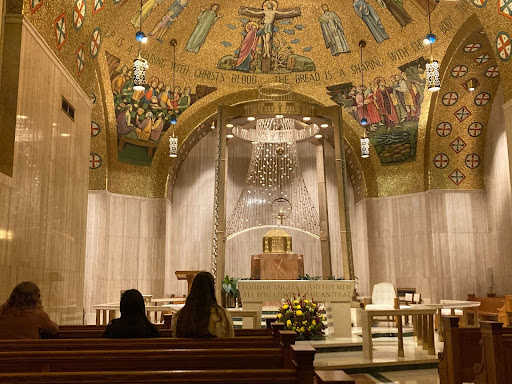
Falling 46 days before Easter and marking the beginning of Lent, the Catholic tradition of Ash Wednesday makes its appearance this Valentine’s Day. Although serving as a reminder of human mortality, the tradition may seem unlikely to mix well with this day of love, but it is quite the opposite.
Sitting down with George Mason University’s Catholic Chaplain and Mason alumni, Father Joe Farrell explains the significance of Ash Wednesday and the way it intertwines with Valentine’s Day.
A lot of Catholic students on campus are discussing Ash Wednesday this year and making preparations for it throughout the day. What is Ash Wednesday?
“So on Ash Wednesday, we are both recognizing the fact that we are sinners and we are mortal and that we will go back to God, but with it comes a great deal of hope that there is always this opportunity for renewal and rise from the ashes just as Jesus died on the cross and rose from the dead. So the ashes are a reminder of our mortality, but also a reminder of the resurrection we can experience through Christ.”
With Ash Wednesday falling on the same day as Valentine’s Day, how does this day of mortality go with this day of love?
“It’s actually very fitting because Valentine’s Day is based on St. Valentine, who was an Early Church martyr. So he actually died for the [Catholic] faith and was considered a saint connected with romance because he helped couples discover their vocations [of marriage]… So having [Valentine’s Day] coincide with Ash Wednesday, which is about mortality and rising again with Christ, we can focus on the true story of St. Valentine. A saint who gave it all up for Christ but also gives us great hope and a great deal of love among people.”
With Ash Wednesday marking the beginning of Lent, which is a penitential season of sacrificing, how is love mixed within?
“When we give something up, it does not mean we give something up that is bad. We give up something that is perhaps good, but we start to mistake the creation for the creator…[and] give us an opportunity to redirect ourselves toward God. The three traditional ways the [Catholic] Church celebrates Lent are prayer, fasting and almsgiving. So we give God the gift of time through our prayer… We stop using and enjoying something that is good to focus on the high good, which is God, and almsgiving. Perhaps we give up going to Chipotle or going to Starbucks and then that allows us to have extra money to give to those who are less fortunate, give to those who are hungry or those who are homeless.”
In a way, is the traditional celebration of Lent of taking time to do more similar to the celebration of Valentine’s Day?
“Things we experience that we love, whether it is God, family, friends or our romantic partners, those are things that we can take for granted… Special events and anniversaries like Valentine’s Day and the holiday season where [we] can be more intentional about [our] appreciation for others is the same thing with Lent. It’s an opportunity to reconnect with God and become more intentional about our relationship with Him. It is a great check-in period for our relationship with God, the same way we have it in our relationships with one another.
I encourage people to find their own way of living out Lent and St. Robert Bellarmine Chapel is available every day of the year. It’s right across the street from the university and please check us out and we would be happy to help you live a great Lent and beyond.”
Those who are interested in getting connected with Fr. Joe Farrell at St. Robert Bellarmine Chapel may visit Catholic Patriots.
Fourth Estate/Mitchell Richtmyre
The Patriots dominated the Revolutionaries from start to finishBY GABRIEL KING, SPORTS EDITOR
Mason men’s basketball defeated George Washington 90-67 on Tuesday night to split the season series. The Patriots (17-8, 6-6 Atlantic 10) never trailed in the game as they sent the Revolutionaries (14-10, 3-8) to a seventh straight defeat.
Mason started the game on a 14-2 run, which included a 3-5 start from 3-point range. The Patriots ended the first half with a 54-27 lead, marking their most points in a first half this season. Despite George Washington outscoring Mason in the second half, the Patriots cruised to a dominant win, as they scored at least 90 points for the fourth time this season.
“This was a much-needed win on our home floor,” Head Coach Tony Skinn said. Following its three-game losing streak, Mason has won consecutive games to get back to .500 in conference play. The Patriots were led by 20 points and 12 rebounds from Keyshawn Hall, 16 points from Amari Kelly and a season-high 13 points from Woody Newton.
Darius Maddox, the Patriots’ second-leading scorer, missed his second straight game with an ankle injury. In his absence, freshman Austin Ball played extended minutes and scored a career-high ten points. “With Darius out, someone’s got to step up. And I thought that was my time to show up and play some big minutes,” Ball said.
Along with a strong offensive performance, Mason was able to grow its lead by playing stifling defense. The Patriots held the Revolutionaries to 30.6% shooting in the first half and 40% in the game. This included holding GW’s James Bishop IV, the A-10’s fourth-leading scorer, to 10 points on 4-15 shooting.
“I’ve got a lot of respect for James Bishop… Our defense in the first half really set the tone and made him uncomfortable,” Skinn said. The Revolutionaries were also without Darren Buchannan Jr., their second-leading scorer, which made Bishop’s struggles even more difficult to overcome.
“[When Bishop struggles] we lose. That’s one thing that happens. We lose,” GW Head Coach Chris Caputo said. “We were bad, obviously. They returned the favor… We played very well at home against George Mason.”
Avenging the 75-62 January loss to the Revolutionaries was on the Patriots’ minds heading into the game. “It was really revenge. We wanted this one bad, so we went and got it,” Ball said. The 23-point victory is Mason’s largest win ever against GW.
With the win, the Patriots maintained their seventh place position in the A-10 standings. Mason remains three games out of a top-four spot. The Revolutionaries’ freefall in the standings continues, as they sit at 13th following their seventh consecutive loss.
The Patriots have a week off before returning to action against nationally-ranked Dayton on Feb. 21. Despite the tough test ahead, Mason’s mindset remains the same. “With all due respect, we’re going to do what we do. We’re not going to change anything because we’re playing Dayton,” Skinn said.
Fourth Estate/ Brandyn Fragosa
SJP Protestors aim chants at President Gregory Washington during the “Divest From Death” protest last Thursday
BY BRANDYN FRAGOSA, OPINION EDITOR
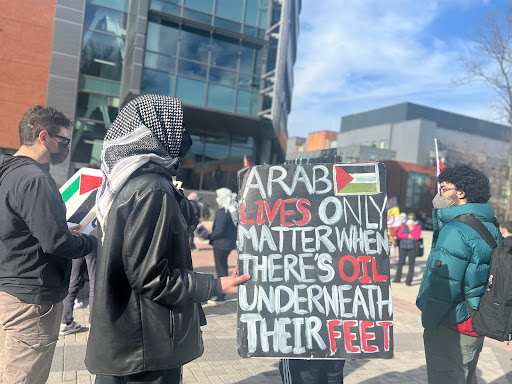
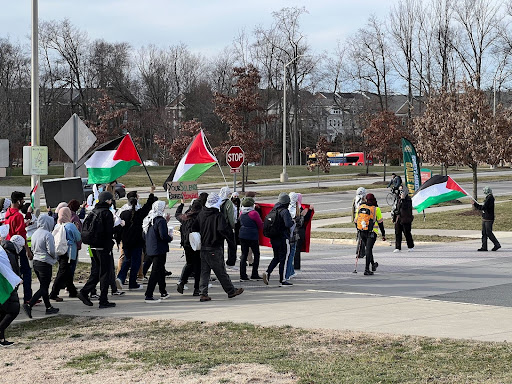
Last Thursday, Feb. 8, the “Divest From Death” protest was held by Students For Justice in Palestine at George Mason University. The protest started in Wilkins Plaza at 2 p.m. and ended at 3:28 p.m. following a march to Merten Hall. According to their post, SJP Mason demands “an end to all ties that George Mason University has to military contracting companies.”
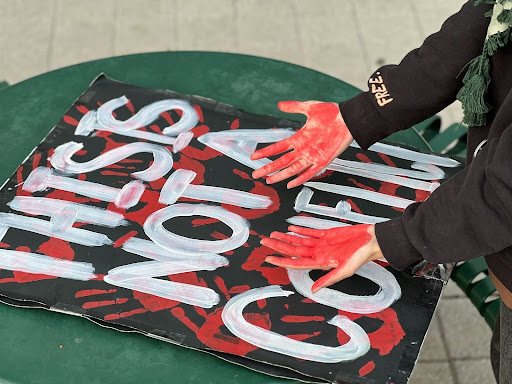
Protesters, wearing black and white keffiyehs along with red painted hands, held up signs saying, “This is not a conflict,” and “Free Palestine now.”
“You [President Washington] have blood on your [his] hands because as we know, George Mason University is investing in and taking money from the defense contractors for its programs,” an SJP Mason protest organizer alleged.
The Protest, which took place a day after the Student Town Hall on Feb. 7, featured a speech about President Gregory Washington.
“Yesterday, the President of our university, Gregory Washington, stated, and I quote, ‘The same companies that create damage over there, create the same weapons that defend your freedom, the same company provides the weapons that allow America to be what it is,’ and to Gregory Washington I would like to ask, allows America to be what? The perpetrator of global violence? Do Palestinians in Gaza not deserve that same freedom,” an SJP Mason protest organizer said.
“Gregory Gregory you can’t hide, you’re complicit in a genocide” protestors chanted. “Shame on you Washington,” another chant said.
Fourth Estate/ Brandyn Fragosa
The SJP Mason protest organizer then said that Mason is allegedly, “investing in the American corporations that are profiting from the genocide of Palestinians in Gaza.”
The organizer then claimed that Washington is, “complicit in the murder of innocent Palestinians,” and, “hold [him] responsible for [his] failure to act.”
One protester also made a claim regarding Mason’s funding. “I feel like it is important for us to speak up and speak on the $26 million that George Mason directly funds to bomb the children in Gaza,” the protestor said. “I feel like it’s very important for all students to come out to protest because all of our oppressions are connected and that includes Sudan, Congo and Tigray.”
Regarding an alleged funding of $26 million, Washington denied this claim at the Student Town Hall. “We don’t know where that number came from, don’t trust what you read on social media.”
“George Mason University does not actually invest money anywhere. There is a separate 501(c)(3) called George Mason University Foundation that actually does all of the investments for the campus. It’s a separate 501(c)(3) with a separate leader with a separate board. It does not answer to the Board of Visitors, and it does not answer to the President… It is not your tuition dollars,” Washington said.
As of Feb. 14, Fourth Estate could not verify funding allegations made by SJP Mason.
At 2:45 p.m., the protesters left Wilkins Plaza and began marching towards Merten Hall, holding up signs, beating drums and chanting along the campus. “Up, up, up with liberation, down, down, down with occupation,” they chanted.
Fourth Estate/ Brandyn Fragosa
An SJP Mason protest organizer then gave the speech they spoke at Wilkins Plaza outside Washington’s office in Merten Hall for the remainder of the protest.
At 3:28 p.m., another SJP Mason protest organizer ended the protest with a chant in Arabic, saying:
“!أنا راجع راجع – راجع
!أنا راجع راجع – راجع
!على أرض بلادي – راجع
!على صفد و يافا – راجع
!على عكا و حيفا – راجع
!على الخليل – راجع
!و على غزة – راجع
!أنا راجع راجع – راجع
!أنا راجع راجع – راجع”
According to the organizer, the chant is a call and response meant to rally and energize participants in student protests.
“The part that I would say or the person who is leading the chant, they are saying, ‘!راجع
– أنا راجع راجع,’ which basically means I’m returning or I’m going back, and then the people respond with I’m going back. So I’m returning and they’re returning… then when we start switching up saying things like, ‘!على أرض بلادي – راجع.’ That’s listing the cities that we want to return to, which are cities in either occupied Palestine or the West Bank or the Gaza Strip,” the SJP Mason protest organizer said.
“We will return because that’s ultimately what we want with our movement… to return to our rightful home.”
Fourth Estate/Tiffany Boggs
Some Mason Students have mixed feelings about Valentine’s DayBY TIFFANY BOGGS, STAFF WRITER AND VIVIANA SMITH, MANAGING EDITOR
The concept of “Cupid’s arrows” are a hit or miss for some in the Mason community. With both traditional and modern points of view, various Mason students plan to listen to their hearts this Valentine’s day and show appreciation for others in their own ways.
The special holiday falls every year on Feb. 14, where it’s known across the world as the day full of love, flowers, chocolate and gift exchanges between loved ones. However, there are some Mason students who have a different thought approach towards the holiday.
Sharing the love is universal, but for some students, traditional societal norms influence how they navigate the romance scene.
Students like Junior Edmund Leigh agree with traditional expectations, explaining that men are expected to approach the person they are interested in. “I don’t think it’s wrong for a woman to ask a guy out… but I feel like initially, the guy should ask the woman out. Be a little more bold.”
Freshman Paul Laosiri expressed that today’s society has moved away from traditional standards surrounding asking someone out. “I think a few years ago it used to matter but now… general consensus [is] it can be both.”
Despite long-standing patriarchal standards, many students agreed that times have changed and gender doesn’t dictate who should do the asking.
“I think the purpose is just the other person telling the other person how much they care about them,” one student said.
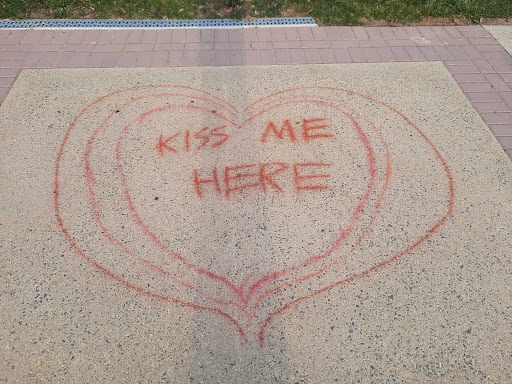
For students like Sophomore Sydney Carver, Valentine’s Day is a favored holiday, and she explains how much she has loved heart-shaped things since her childhood. The flowers, heart-shaped candies with romantic sayings like “Kiss me” and the chocolates are the core part of Valentine’s Day, but Mason students feel it’s overrun by commercialization.
“I think it has been really commercialized, especially because you don’t really get off on Valentine’s Day,” Pirooz said.
Though some believe companies capitalize on the holiday, the Mason community agrees that the memories you make with the people you care about are priceless.
“Of course companies [are] gonna commercialize everything and every holiday, but I think it’s still meaningful,” one student said. “It’s just another day to show your appreciation [for] someone you care about.”
Sophomore Jenifer Zhandira feels the holiday is losing its value due to seeing younger kids not celebrating as much in school and the social pressures of hookup culture. “Now for our generation, it’s more like who’s going on dates and then, like, if you’re not in a relationship then it’s, oh, girls, we gotta find dates.”
Although there are mixed feelings about the holiday, Valentine’s Day is widely believed to be a meaningful celebration of love.
“It doesn’t matter who you are, what you look like, or what you think, you are loved and you should be loved no matter what anyone else tells you,” Junior Grace Millirons said.
Fourth Estate/Andani Munkaila
Students addressed concerns about letters to the student body, safety and funding to President Washington during Student Town Hall.BY ERICA MUNISAR, EDITOR-IN-CHIEF AND BRANDYN FRAGOSA, OPINION EDITOR
Editor’s Note: Fourth Estate uses language in accordance with AP style guidelines. For more information on the use of the “Israel-Hamas war”, please visit the AP Stylebook.
The full transcript from the student Town Hall held on Feb. 7 can be viewed on Fourth Estate.
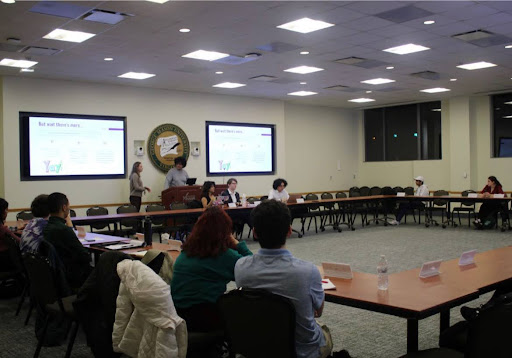
On Feb. 7, a Student Town Hall was hosted by University Life at The Hub Ballroom, in which the student body was provided the opportunity to ask questions to President Gregory Washington about the university. The Town Hall, scheduled from 1 to 2 p.m., ended 23 minutes overtime. 11 people spoke, with several asking follow-up questions.
The town hall featured several questions revolving around the Israel-Hamas war, funding and security topics along with protest demonstrations from Students in Justice For Palestine at George Mason University.
During the beginning of the session, Washington delivered a 16-minute speech addressing the Israel-Hamas war following the release of numerous letters to the student body since Oct. 10, from the Office of the Vice President and Office of the President.
“Our support of one group of students does not mean we are against another group. Our support of one group of students does not mean that we support their government or any government,” Washington said.
Washington went on to address more aspects of free speech at Mason.
“Look, I have been asked on numerous occasions to stop the student protests. Even when you’re protesting against me, I still support it because I support freedom of speech,” Washington said.
Washington also shared that antisemitic incidents have occurred on campus. “More than 70 incident reports that came to our offices were about instances of antisemitism… We’ve had now two confirmed assaults on students. Those were both to students of Jewish descent,” Washington said.
“This is an extraordinarily complex issue,” Washington said. “No, it’s not,” one protester interjected. “Apartheid is not complicated,” another protester added.
Washington also mentioned that students come to Mason to learn, with some of them considering future careers in the defense industry. In response, a member of the town hall interjected, “They want to be war criminals.”
Following Washington’s presentation, students lined up to ask questions, give speeches and provide statements. While Washington responded to the student’s concerns, attendants of the town hall voiced their rebuttals.
In an Instagram post by SJP Mason, they encouraged students to join the Student Town Hall to, “make [their] voice heard,” and “Demand justice for Palestine.”
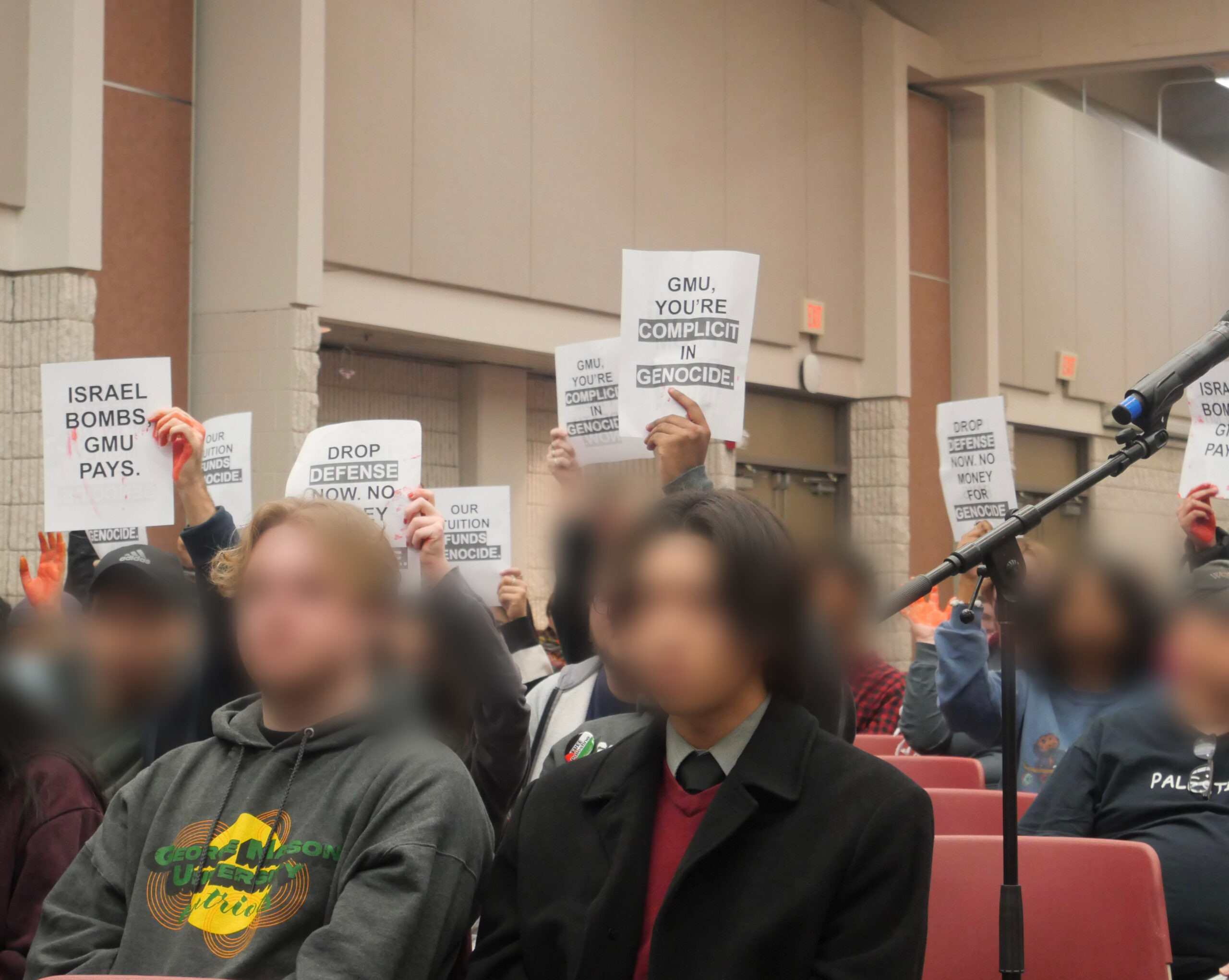
During the session, SJP Mason members took up the majority right side of the hall, wearing black and white keffiyehs and holding up red painted hands. Additionally, SJP Mason handed out posters with statements that read, “Israel bombs, GMU pays,” and, “Drop defense now, no money for genocide”
Regarding allegations of Mason’s funding, one SJP member accused Washington of investing $26 million towards the Israel-Hamas war, which was promptly denied by Washington.
“It is also public knowledge that George Mason University is investing in American corporations [which are] profiting from the genocide of Palestinians in Gaza,” said one SJP Mason member. “$26 million, approximately 10% of the student investment fund, is funding the ongoing genocide to murder innocent civilians, men, women and children.”
Washington responded, “We don’t know where that number came from… George Mason University does not actually invest money anywhere. There is a separate 501C3 called George Mason University Foundation that actually does all of the investments for the campus. It’s a separate 501(c)(3) with a separate leader with a separate board. It does not answer to the Board of Visitors, and it does not answer to the President… It is not your tuition dollars.”
Another attendant of the town hall said, “For disabled activists like me, face masks are vital in [the COVID-19 pandemic]… As someone who especially struggles with fine motor skills, pulling out my ID when prompted can be a struggle. Thus, I and many others are faced with the dilemma of either attending political actions…or forcibly [staying] at home… Why will you not support and protect disabled activists at GMU?”
President Washington addressed this concern about Mason’s Concealment of Identity policy, explaining that the university is required by Virginia state law to identify those who wear face coverings at venues or protests.
“We don’t tell you that you can’t wear your face coverings. We just tell you that somebody has to identify who you are… That’s our way of meeting the spirit of the law while simultaneously allowing you to protest, and not doing what other institutions are doing when students show up in face masks and shut the whole protest down,” Washington said.
Washington was asked if he could halt tuition increases by an attendant who shared that they struggled to pay for their books and courses. “As you know, there are five R1 institutions in the state of Virginia. Of those five R1 doctoral institutions, Mason has the fourth lowest tuition. We live in the region that is by far the highest cost of living in the state, and in the top five highest cost of living regions in the whole country.” Washington said.
“I have to balance what the tuition is relative to what resources we need in order to provide the faculty and staff to be able to teach and support them. The fact that our tuition is as low as it is, given the constraints that we have, and that we are still able to operate, is actually a testimony to success,” Washington said.
Another attendant asked Washington to address alleged ties with military-industrial complexes and graduate students who go on to work for defense contractors.
“[It is] not just defense contractors. It’s Amazon, it’s Microsoft, it’s Apple, it’s everybody… George Mason University is a public institution. Those corporations pay public taxes…” Washington said. “A large percentage of students come to Mason to engage and get jobs from the very companies that you’re telling me to divest from. …Just because you don’t think you should take a job there… what about those students who actually are trying to get jobs at those companies?”
“The same companies that you will say ‘okay, well that company created a bomb that caused damage over [there],’ that same company produces the weapon that will defend your freedom. That same company provides the weapons that allow America to be what America is.” Washington said as multiple protesters interjected.
Towards the end of the town hall, one attendant delivered a four-minute speech related to the history of Palestine. In his statement, the attendant told Washington, “Look at me. Look at me. Don’t look around. Look at me.”
“Listen to me, we’re not going there. I will sit you down son, you will not disrespect me. You don’t tell me to look at you.” Washington said.
The town hall ended overtime at 2:23 p.m. Of the 11 people who had spoken, five people remained in line without asking a question while one SJP Mason member attempted to speak into the microphone while it was turned off.
The full transcript of the Town Hall, including Washington’s presentation and questions from all 11 speakers can be seen on Fourth Estate.
Fourth Estate/Andani Munkaila
TRANSCRIPT OF FEB. 7 STUDENT TOWN HALL: GREGORY WASHINGTON’S OPENING PRESENTATION A full transcript of Dr. Washington’s 15-minute presentation from the Feb. 7 Student Town Hall addressing letters to the student body.BY ERICA MUNISAR, EDITOR-IN-CHIEF
Editor’s Note: Fourth Estate decided to deliver Gregory Washington’s 15-minute presentation from the as an unedited transcript for transparency towards the student body.
Thank you all for giving me the opportunity to address you today. I got five slides I’m going to push through so that I can leave as much time for questions and engagement as you possibly can.
As you all know, I’ve been getting a lot of emails from many of you and from many folks in our community, and so I want to take some time to address some of the questions that I’ve compiled upfront so that we make sure that those particular ones are answered because I get a lot.
So, why did we write letters? As you all know, I’ve written now probably some ten to 15 different letters on different issues. [Letters were sent to the student body by both the Office of the President and Office of the Vice President, however not all of the Vice President’s letters are available online.] We don’t just write those to opine on given issues. We write the letters for a reason, and I don’t sit and just write the letter myself. There’s a whole team of us, some 15 or 20 people, who together, we work to put out every single communication that comes across your desk.
So why do we write? We write it for four reasons. One, to provide information. There are times when that’s needed. Two, to provide guidance as we did during the COVID-19 Crisis. Three, to provide comfort and calm. We did that during the Russia-Ukraine crisis. We did it during the George Floyd tragedy, during the Brianna Taylor issues. [Fourth Estate could not verify a letter about Brianna Taylor.] And then [four], to provide education. We did that during the affirmative action ruling. Those are the reasons why we write them to begin with.
Four letters of recent time have caused some controversy, and I want to address them and address them directly. We wrote a letter on Oct. 10 about the unfolding war in Israel and Gaza, and that war was written as comfort and information. We wrote a follow-up letter to that on Oct. 17 that was written to address issues related to student protests. And I’m going to talk a little bit about that in detail here in a second. We wrote a third letter on Nov. 2 to introduce our 10-point plan [Fourth Estate determined that there are eight points according to the Patriot Plan for Community Safety and Well-Being.] to ensure student support and safety. And when we wrote the last one on Nov. 28 relevant to Islamophobia. So those were the communications.
Look, we are never ever against you. We’re always for you. That’s why we are here. We are actually here to support you. And while we may disagree and tell you some things that we disagree with, it does not mean that we are against who you are.
Our support of one group of students does not mean that we are against another group. Just because we write a letter in support of one group, it does not mean that we are against another group. If I write a letter in support of Jewish students, it does not mean that I’m against Muslim or Palestinian students. And if I write a letter in support of something that our Muslim students are dealing with, or our Palestinian students are dealing with, it does not mean that I’m against Jewish students. We only write letters in support. Read the letters. We have copies of them in the back so that you can actually read the detail.
Our support of one group of students does not mean that we support their government or any government. “I support one group of students,” doesn’t mean that we support the government or any other government? We’re in the business of supporting our students here. We’re not in the business of supporting or opining about governments. Again, that’s very clear in our letters.
Our support for each group is based on the needs of that group. [unintelligible] in that regard, it may not look the same in terms of our support for one group relative to our support for another, because the individual needs are different and the actual groups are different. And just because we tell you something that you have done this wrong, it still doesn’t mean we don’t support you. It means that we got a problem with something that you’re doing and that it needs to change. And ultimately, our goal is to protect and support all of the students in our institution.
Let me talk a little bit about some of the questions that I’ve received directly from you about the Israeli-Hamas conflict.
One, why did you not say anything about the atrocities committed by Israel on the Palestinians during this current conflict? Look, when my letter was written on Oct. 23 [Fourth Estate could not locate a letter from Oct. 23.], the Israeli bombing when terms would be seen at this point, had not started in my letter on Oct. 17. The Oct. 17 letter directly addresses the deaths of innocent Palestinians. It’s written in the letter.
Why did you not say anything about the atrocities committed by Israel? By the Palestinians since 1947? The issue’s a complicated one, [“No it’s not.” A protestor interjected.] extraordinary. Since 1947, there have been five wars going back [to] 1948, 1958,1967, 1973, 1982 [unintelligible.] This is an extraordinarily complex issue. [“Apartheid is not complicated.” A different protestor interjected.] You’ll get your opportunity to talk. You can make your statements then.
Why did you say the [Oct. 7] attack on Israel was a terrorist attack? Is it important to call out things for what they are? You can’t defend the indefensible. I called it a terrorist attack, because it was a terrorist attack. I did not call any student a terrorist. I called what Hamas did a terrorist attack. It was a terrorist attack.
Relative to this, look, we have to be able to have discussions about things when they happen, while they’re happening and in real time. And so it was very important for us as a campus, looking at what was happening on our campus at this specific point in time, and looking at what a number of our student groups were outwardly writing about this issue, to call attention to the fact that it was a terrorist issue and not indicative of anything that the university supports.
Again, I have letters back there from SJP that highlights what they wrote on Oct. 9 after the attack in Israel. Those of you who are students who have not read that should read it, so that you understand the context of why we say what we say, and why we do what we do. I am not the person that’s [going to] run from any type of conflict. I stand firm, I stand strong and I will tell you how I feel about an issue. [I am] just not built that way. Okay? And so before you step, understand that I will respond.
Why is the community angry at our students? We have received now hundreds of letters and calls, mostly angry, that we are allowing student protests and we are allowing our students to use hateful language. I have received numerous threats in the press. I’ve had calls from my job in the press for allowing our students to protest. That is a fact.
Why did you not say anything? [unintelligible] Why did you not speak about more about Islamophobia like you did about antisemitism? We addressed the antisemitism when we did because we had more than 70 incident reports that came to our offices [which] were about instances of antisemitism. And given the size of the two groups on campus, we felt that we needed to address it. We’ve had now two confirmed assaults on students. Those were both to students of Jewish descent. And so we felt the need to address that to the broader community.
Why is the campus not [unintelligible] for Justice in Palestine and the Muslim students in general? Well, we are supporting all of our students. How do we support? Look, I have been asked on numerous occasions to stop the student protests. Even when you’re protesting against me, I still support it because I support freedom of speech.
The reality of the situation is right now the university is under investigation by the Department of Education because we’ve allowed the protests to continue. Go read the letter. I have it in the back for you. The formal letter from the Department of of Education Office of Civil Rights [will] highlight this.
So before you say you’re not being supported, that’s a fact. That is a fact. We have been managing issues related to freedom of speech and freedom of assembly. We have been doing that in manner that we believe [is] in alignment with university values. That’s what you want your institution to do. The institution stands for certain principles, and as the leader of that institution, I stand on the principles in which the university has stood for. You know what that’s called? And I do it even when it’s in the face of adversity, that’s actually called leadership. That’s what you expect your leaders to do.
I’ve supported this community and shielded them from a very, very hostile community that actually wants to do you harm. I can’t go through all of the individual issues relevant to this, but it is true and I got the proof and the emails and the telephone calls to validate it.
So as I wrap up, look, we are here to support you. We are here for you. I know of no other way to support you outside of the ways in which we’re supporting all of you. I know some of you don’t like what’s happening. I don’t either. Okay?
In my leisure, I call in my letters for Palestinian self-determination, for Palestinian state. I support that, all right? I also support Israeli and Jewish safety and defense. I support both.
Just because you support one it doesn’t mean that you don’t have to support the other there’s no rules that say you have to support one and not the other. You can actually support both because in a lot of sense both are correct.
What’s happening now in Israel is an atrocity and we have to deal with it and we have to address it as a community. So I don’t want you to think that we’re against you, in any stretch of imagination or against any of it. We support all of them.
I will leave you with one word of advice before I open it up for questions: Don’t turn on each other.
I have received numerous reports of students [like] Jewish students who longer talk to their Muslim friends, or Muslim students who no longer talk and communicate with their Jewish friends. People who they used to connect with, people who they used to engage, those conversations are not happening now.
That’s a problem. I don’t know any other way to tell you. People are not their governments. People are people. And they should be judged and engaged based on who they are, and the content of their individual character. Not by who you think they represent. I know what that feels like. I’ve experienced that. People look at you and think that you are a certain way, that you are a certain type [and] that you do certain things. And I can tell you unequivocally that it is wrong.
And so on that note, I will open it up for questions.
TRANSCRIPT OF FEB. 8 STUDENT TOWN HALL: QUESTIONS AND ANSWERS FROM DR. WASHINGTON A summarized transcript of questions asked by 11 attendants revolving around the Israel-Hamas war, funding and security topics along with protest demonstrations from Students in Justice For Palestine at George Mason University.BY ERICA MUNISAR, EDITOR-IN-CHIEF
Editor’s Note: Fourth Estate published a summarized transcript of questions and answers from the Feb. 8 Student Town Hall. Due to the nature of the town hall, in which protestors and Dr. Washington rapidly exchanged responses over the period of an hour, including numerous follow-up questions, the responses were edited for clarity and do not reflect Dr. Washington’s full statements per question asked.
[Questioning portion of Town Hall begins at 1:17 p.m.]
Who are the approved members that can ask for identification in the new Concealment of Identity policy? What qualifies as a face covering, and how will this policy be enforced?
We put mechanisms in place to ensure that people are identified once they enter a venue or protest…
We’ve been using university staff from university life and from our risk and assessment team who’ve been checking the IDs, and they’ve been supported by the police. This came about by state law [Code of Virginia § 18.2-422]. We were required to do this… The individuals who are doing the checks are given very, very strict instructions as to what it implies…
Again, this is not a Mason rule, this is a state of Virginia law. You know why it was put in place? It was put in place because the Ku Klux Klan was wearing hoods to hide their identity when they were protesting and committing atrocities in the state of Virginia.
President Washington, three and a half months ago I was in your office as lead organizer with Students for Justice in Palestine… You claimed in conversations with myself as well as numerous Palestinian students over the past four months that you know more about what we call Palestine… because you have been to Israel more than five times… Do you feel you still have more knowledge than us because of your trips? When you have done so little?
I have never said that I know more than anybody… What I did tell you is that I knew things about the issue. I have never said that I know more than the people in this room. I would never say that… You are entitled to your own beliefs. You are not entitled to your own facts.
You recorded the conversation, play it for the people… and you will see that I did not say that… Just because some people think you heard something, it [does not] mean that is what I said.
Could you please consider a halt on the increases of tuition, or a halt to the student fees?
As you know, there are five R1 institutions in the state of Virginia. Of those five R1 doctoral institutions, Mason has the fourth lowest tuition. We live in the region that is by far the highest cost of living in the state, and in the top five highest cost of living regions in the whole country.
I have to balance what the tuition is relative to what resources we need in order to provide the faculty and staff to be able to teach and support them. The fact that our tuition is as low as it is, given the constraints that we have, and that we are still able to operate, is actually a testimony to success…
We’re working on ways to help those students who are most vulnerable… We’ve actually done a tremendous job in lowering the cost for those that are most vulnerable…We will continue to drop that number as much as we possibly can. And we have mechanisms in place to do more.
Our school has heavy ties with the military industrial complex… We live close to D.C. and people need to be employed, but it’s also something that really needs to be addressed, and I absolutely haven’t seen that from the administration.
Let me address that directly…
The companies that engage our campus, whether our our whole host of companies, they’re all the companies that ingratiate the Northern Virginia area, not just defense contractors. It’s Amazon, it’s Microsoft, it’s apple, it’s everybody… George Mason University is a public institution. Those corporations pay public taxes…
They engage with us for students. Those students graduate and they go work for those companies. A large percentage of students come to Mason to engage and get jobs from the very companies that you’re telling me to divest from.
Everybody doesn’t see the world the same way. And so, if you don’t want those companies involved with Mason, it is extraordinarily easy to stop it. You have agency. Don’t take jobs there, don’t apply there, don’t work there and guess what the companies will do? They will go to another university that’s willing to supply their talent.
We have 40,000 students. A significant percentage of those students would love to take a job at Raytheon. Just because you don’t think you should take a job there… what about those students who actually are trying to get jobs at those companies?
[Follow-up Question] It isn’t just about jobs or people’s individual choice to have jobs. It’s about community responsibilities.
I hear you, but the same companies that you will say “okay, well that company created a bomb that caused damage over [there],” that same company produces the weapon that will defend your freedom [Protestor interjections unintelligible]…
That same company provides the weapons that allow America to be what America is [Protestor interjections unintelligible]… And that is the good and the bad. And without it… we would be living in a very, very different position here in a country without that protection. Look, again, these are complex, complex issues.
I am a representative for Students for Justice in Palestine… It is also public knowledge that George Mason University is investing in American corporations [which are] profiting from the genocide of Palestinians in Gaza. $26 million, approximately 10% of the student investment fund, is funding the ongoing genocide to murder innocent civilians, men, women and children. You are complicit… It is on the George Mason University website.
We don’t know where that number came from. Don’t trust what you read on social media. What website? You’re going to have to show me that…
George Mason University does not actually invest money anywhere. There is a separate 501(c)(3) called George Mason University Foundation that actually does all of the investments for the campus. It’s a separate 501(c)(3) with a separate leader with a separate board. It does not answer to the Board of Visitors, and it does not answer to the President… It is not your tuition dollars.
[Follow-up Question] And your statement about these weapon manufacturers helping to protect our freedom… Do Palestinians not have that same right? By providing them weapons, we are giving them the power to kill more Palestinians.
They [Palestinians] have the same right… The weapons that are used, are used to not only support individuals… but they can also be used for harm. It’s not the weapons themselves that’s the problem here. It’s the individuals behind the weapon that’s pulling the trigger… You’re focused on something different than what the issue is…You’re going after the weapon and not the people.
But what I will tell you is that’s not a decision that your president makes… We’re not in the bombs making business and we’re not in a bomb supporting business. We don’t do any of those things. We’re in the student graduation and support business.
Hello, President Washington. Over the course of these four months…there have also been increasing cases of hate crimes against Palestinians, Arabs and Muslims here in the United States… [Your] students are all vulnerable to attacks just like these, and what exactly have you done to ensure their safety?
Part of the reason that you’ve seen an increased police presence is actually not to surveil or to intimidate you. It’s actually to protect you…
The 10 point plan [Fourth Estate determined there are eight points according to the Patriot Plan for Community Safety and Well-Being.] that we put in place, the Patriot Plan, is a big part of the reason why we haven’t had those same incidences on our campus that you’ve seen happening elsewhere
We do have police reports. We do have bias incident reports… We take this information seriously and we monitor it, so we have a pretty decent idea of what’s happening how students are being protected and our students alone. Can we stop every single incident from happening? No. But we have thwarted incidences from happening. I can tell you that.
[Follow-up question] Those counter-protesters went into people’s faces and literally verbally attacked [SJP Protestors], if not physically tried to attack them [as claimed by SJP Mason].
You’re not entitled to your own facts. Look, there was no student assaulted physically in the counter protest… Just because somebody says something to you, just because somebody calls you out in your name, or says something negative. That is known as physical assault. They actually have a right to say that under the same rationale and reason that you have a record saying what you want to say. And yes, they said some vile things. But you weren’t protected. And those individuals were escorted off of our campus to keep anything else from happening…
We do have video evidence… and I can tell you that no student was physically assaulted, at least not in anything that I saw. There was no report… Where’s the Chief? I know he’s here somewhere. Chief, did we get a physical report of anybody physically assaulted? [Chief of Police Carl Rowan says no], were you there? [Rowan says yes.] Okay…
You’re going to be in an environment where you might not feel intellectually safe, but you will be physically safe to the fullest extent that we can provide for you… Take a look at the data. It’s one of the safest campuses in the whole country.
It is our understanding that there are new policies regarding face masks and a requirement for students to show identification should they have [a mask on]… For disabled activists like me, face masks are vital in [the COVID-19 pandemic]… As someone who especially struggles with fine motor skills, pulling out my ID when prompted can be a struggle. Thus, I and many others are faced with the dilemma of either attending political actions…or forcibly [staying] at home… Why will you not support and protect disabled activists at GMU?
We don’t tell you that you can’t wear your face coverings. We just tell you that somebody has to identify who you are… That’s our way of meeting the spirit of the law while simultaneously allowing you to protest, and not doing what other institutions are doing when students show up in face masks and shut the whole protest down… You will see that we are actually supporting First Amendment speech more than you think.
We can actually develop an accommodation for you relative to that issue, and we have people here who can help you do that…
Let me say one other thing while i’m on this subject… There’s a reason why people are angry and you’re seeing such a pushback [with shut down protests by other institutions]… When our students marched across campus and you use slogans like from the river to the sea, we have other students who see that as the annihilation of their culture… When you have student groups who literally write letters in support of what Hamas did on Oct. 7, that angers people…
[“Once again, you didn’t answer the question and you fail to support your students. You are gaslighting your students.” An SJP Mason protestor interjected.]
How are you proposing that we as a community open this discussion going forward? There is quite a bit of unrest on campus.
We have faculty who are doing a series of teachings and lectures. I have sat down with groups of faculty on both sides on the Jewish side, and on the Muslim side and I have asked those to pull together courses and information to help people understand what is truly and really happening. [“This isn’t Jews versus Muslims.” a protestor interjected.]
When I say engage with one another, I mean engage with someone who believes differently from you on this very issue. Talk to them see their side of the issue. Help them see your side of the issue, but do so in a respectful and engaged manner. That’s how we all get better.
I’ve listened to you pretty much justify a lot of administration’s actions. I’ve also heard you phrase a lot of what’s going on in Palestine today as a Jewish versus Muslim conflict… You’ve also said that it’s a complex issue… So my question to you is, what part of Jewish safety necessitates settler colonialism?
[Speaker told Washington to look at him while he is speaking. “Look at me. Look at me. Don’t look around. Look at me.” said the speaker.]
Listen to me, we’re not going there. I will sit you down son, you will not disrespect me. You don’t tell me to look at you.
The reality is I believe and support both Israeli safety and security and Palestinian statehood. I believe that both are achievable in the context of what we have today. Right. The fact of the matter is that you got current leadership in Israel, and current leadership in Hamas [who] don’t want that…
I’m not making a political statement here to justify one thing or the other because I’m not qualified to do so. Remember, we don’t make statements for political ends or means. We make statements to do the four things that I highlighted, above, to instruct, to console, to comfort [and] to educate…
Mr. Washington, I’m dying to ask this question. What can you do on campus to ensure mental health?
We’ve added an increased support for a system called Timely MD, if you all have not signed up for it, it’s available to all of you as students. You should all set up an account if you have not done so already.
Then we increased support for CAPS… our psychological services that actually helps students in need. So we’ve increased dramatically the amount of support for those entities.
I have been in Jammu and Kashmir. I have been shot three to four times by the Indian military… I know exactly what the Palestinians go through on a daily basis… And honestly about your statements with Palestinians, I find it despicable… You’re not able to call it a genocide in against the Palestinians in Gaza… Thank you very much.
[Following a four minute speech from the attendant, attendants of the town hall cheered at the end of the statement. The town hall concluded at this time by 2:23.]
So on that note, I want to thank you all for coming. God bless. Have a great afternoon.
Fourth Estate/Madalyn Godfrey
What communication undergraduates can do to prepare for their first experience in the field.
BY MADALYN GODFREY, ASSISTANT OPINION EDITOR
Mason Alumni and Career Services Employer Engagement Consultant Philip Wilkerson has helped countless undergraduate students with career development and professionalism for over ten years. Although no longer in a role that meets with students, Wilkerson continues taking time to share advice with undergraduate students, including sitting down over Zoom with communication students in COMM 309, or Writing Across the Media.
Wilkerson started his professional career with uncertainty after graduating from James Madison University and began his career working with school systems in Northern Virginia. From working with schools, Wilker was inspired to obtain his master’s degree from Mason which led him to work as a Career Counseling Intern for Career Services in August of 2011. His role as a Career Counseling Intern led him to his current role.
Through this experience working at Career Services, Wilkerson emphasizes the importance of students taking the initiative to build portfolios in college, especially for those going into the communication field.
“I would advise students to not wait to create meaning,” Wilkerson said. “…do not wait for a job or internship to create content that’d be relevant on their portfolio. There’s a lot of opportunities to get that content and that experience without a job… because what’s really difficult is that a lot of times experiences need experience to get their foot in the door.”
An example of Wilkerson’s initiative to create meaningful content is his podcast, Positive Philter, where he shares motivational topics with the world; however, Wilkerson encourages students to volunteer with Mason’s Student Media department in organizations such as Fourth Estate, WGMU and Mason Cable Network. He mentions how students can “leverage” those experiences to gain internships and jobs by volunteering.
In addition, Wilkerson also encourages students to become familiarized with “NACE competencies.”
“I think there is a gap between proficiency and what students think they’re proficient in,” Wilkerson said. “Really that education in making sure that students are confident in articulating their skills and abilities to employers…So one thing I would encourage students of faculty members is to really familiarize themselves with NACE competencies…different skills that are applicable to all world of work…so that as they enter the workforce, they’re comfortable and confident in their abilities and able to jump right in.”
While Wilkerson focuses on portfolio-building and competency development as two ways for undergrads to prepare for first career experiences, before signing off from Zoom, Wilkerson makes it a point to extend the invitation for all students to use him as a resource for career development.
“I’m happy to support you…Please view me as a resource here at Mason to help you and help you in your journey as you continue on,” Wilkerson said.
Students interested in connecting with Wilkerson for further advice on career development may reach out to him on LinkedIn.
Fourth Estate/Mitchell Richtmyre
The Patriots faltered defensively in their third consecutive loss.BY GABRIEL KING, SPORTS EDITOR
Mason men’s basketball fell to Loyola Chicago 85-79 on Wednesday night at EagleBank Arena. The Patriots (15-8, 4-6 Atlantic 10) led by eight at halftime, but were outscored by 14 in the second half. The loss is Mason’s third straight, all coming by single digits.
Despite shooting 59.5% from the field, turnovers and porous defense plagued the Patriots in the second half. The Ramblers (16-7, 8-2) shot 71.4% in the second half and scored 49 points in the second half, which was the most points the Patriots have allowed in a second half this season.
“We were just completely discombobulated defensively,” Head Coach Tony Skinn said of the team’s second half performance. Loyola capitalized on Mason’s defensive confusion, which proved to be the difference.
The Patriots took a three-point lead with 6:12 remaining on a 3-pointer from Baraka Okojie, but the Ramblers responded with an 8-0 run to gain control. Sheldon Edwards sparked Loyola’s late run with consecutive 3-pointers of his own. Edwards finished the game as the Ramblers’ leading scorer with a career-high 27 points.
Keyshawn Hall led Mason with 20 points as he continued his stellar season. Darrius Maddox added 18 points, including a buzzer-beating 3-pointer to end the first half, and Okojie scored 15 points, with 10 of those coming from the free throw line.
This is Mason’s second three-game losing streak in the last month, with those six losses coming by an average of 5.5 points. Despite the recent struggles, the Patriots remain optimistic about the remainder of the season. “We’ve obviously lost a couple close nail biters… [but] there’s no need to fret,” Skinn said.
The Patriots’ fortunes may reverse shortly, as they are ranked 265th, out of 362, in the KenPom luck rankings, which project Mason to be better than their current record.
Along with the projected improvement, the Patriots see that they are close to a breakthrough. “We’ve just got to stay together and try to come in everyday and keep working towards winning. We know we can turn it around in an instant because we know we can compete in close games like this,” Hall said.
With the hopes of a top four finish in the A-10 dwindling, the Patriots must turn it around quickly. Mason currently sits ninth in the A-10, three games back of VCU for fourth place.
“At the end of the day, we’re not going to have a defeatist spirit. We’ve had a good season thus far,” Skinn said. The Patriots will return to action on Saturday at Davidson for a pivotal conference game. They will then come back home for their second game of the year against George Washington on Feb. 13. The Revolutionaries won the first matchup 75-62 in January.
Fourth Estate/ Tiffany Boggs
Multiple members of Student Government predict time-efficiency for Town Hall.BY ERICA MUNISAR, EDITOR-IN-CHIEF
Ahead of a Student Town Hall hosted by University Life Wednesday at 1 p.m., questions regarding the efficiency of the Town Hall were raised in the Student Senate on Feb. 1. This included comments from multiple members of Mason Student Government that President Gregory Washington may speak for too long during the Town Hall which is set to last for one hour.
The main conversation of last Thursday’s session was followed by two email chains between former Secretary of Administrative and Financial Affairs Gabriel Curtis and Vice President Rose Pascarell.
Discussion of the Town Hall began during the debate of R. #41 A Resolution to Promote the Town Hall, sponsored by Senator Caden Garafalo.
In one email chain on Jan. 31, which was publicly broadcasted on the boards during the discussion, Curtis requested increased time-efficiency for the one-hour Town Hall, proposing four measures: Arranging a follow-up Town Hall if Dr. Washington is more than 10 minutes late, having Washington send his opening address via email beforehand and limiting the president’s introduction to five minutes, allowing direct public questions to Dr. Washington and limiting his responses to three minutes with the help of a Mason Student Government moderator.
Curtis shared to Fourth Estate that he had sent the email after members discussed Town Hall concerns in a previous Administrative and Financial Affairs Committee meeting, in which he believed the best course of action was to make Rose Pascarell aware of the concerns.
Rose Pascarell responded directly to the email two hours later saying “I find the tone of this message disrespectful as it relates to President Washington.”
“When I asked if student government wanted to host this when I came to speak to student senate last semester, the answer I received in writing was ‘no.’ I still worked with the former speaker to find a time and location that made sense, but this event, at student government’s own choosing, is not run or organized by student government.” Pascarell said.
Later during the session, Student Body President Paul Wyche explained the claim from Pascarell, saying that Mason Student Government declined to specifically host a Town Hall as an organization in the past. “On the ‘no’ in writing remark, I believe that at the Student Senate meeting that Rose Pascarell was at, there was a stark statement made that SG did not want to host a town hall. They want University Life to host it. I personally thought that it would have been fine for SG to host the town hall.” Wyche said.
President Wyche shared a further address to the chamber regarding the email from Curtis. “Do I believe that the email was entirely disrespectful as implied in the response? Not necessarily. Would I have sent the email that Secretary Curtis sent? Probably not. I like to say things a little nicer than [they should be].” Wyche said.
At the end of announcements, Curtis revealed that he was given handwritten sanctions by President Wyche following the email. One demand was for Curtis to apologize to Pascarell for the email. Curtis was additionally told not to speak on behalf of Mason Student Government, and that all emails to administrators must be sent during regular business hours and approved by the President, Vice President or Chief of Staff.
Curtis responded to the sanctions by promptly resigning from his position during the announcements portion of Student Senate. At the end of his announcement, a standing ovation was given by the chamber for the duration of 20 seconds.
Other members of the chamber questioned the necessity of the Town Hall requiring a Mason360 sign up. “I have no idea if they will stop you at the door for not signing up on Mason360. The worst thing is I have way too many concerns about this town hall.” Senator Garafalo said in his author statement. “Gregory Washington tends to go on tangents and give a prolonged introduction. We want to limit the time of his responses.”
Apart from controversy surrounding the upcoming Town Hall, a series of resolutions and appointments were made.
Senior Maaz Abbasi, Freshman Grace Martinez-Cora and Freshman Lee Turner were appointed as Student Senators, each approved with 20 votes in affirmation and one abstention.
Sophomore Simeon Omorodion was appointed as Undersecretary of Public Relations for Website Management with 21 votes in affirmation and one abstention.
R. #40 A Resolution to Support the Mental Health Language Playbook, authored by Senator Zara Saemi, was passed with 22 votes in the affirmation and one abstention. “This resource defines the do’s and don’ts for mental health. It helps people navigate struggles and use effective language for well-being and mental health.” Senator Saemi said in her author statement.
Following long debate and amendments, R. #41 A resolution to Promote the Town Hall was passed with 20 votes in the affirmation and one abstention.
Fourth Estate/Viviana Smith
The “Gender Inclusive Restrooms” project from the LGBTQ+ Resources Center to increase the inclusivity and accessibility of restrooms on Mason’s Fairfax Campus.BY VALENTINA FALA, STAFF WRITER
A “Gender Inclusive Restrooms” project has been ongoing at Mason for more than 10 years. The project, which started in the spring of 2011, began when the LGBTQ Campus Climate Task Force was created by University Life to investigate the situation of LGBTQ+ students on campus including but not limited to infrastructure needs. It was paused since COVID-19 first hit, but recently the project has become a topic of interest for Mason Student Government.
According to the LGBTQ Campus Climate Task Force Report in 2012, the purpose of the task force’s creation was “to discover how free [the LGBTQ+ community] felt to be themselves on this campus and what Mason’s programs and departments might do to promote a campus community that is fully welcoming, safe, respectful and inclusive for students, faculty, and staff of all sexual orientations, gender identities and expressions.”
Junior Bas Rawat, Speaker Pro Tempore and Former Chair of the Diversity & Multicultural Affairs committee, was one of the people interested in revisiting the initiative that involves gender-neutral bathrooms.
“A gender-neutral bathroom is typically a single-stalled restroom that anyone can use. It is also meant to be accessible, as well as a family restroom,” Rawat said. “A lot of trans people/gender non-conforming students/faculty feel uncomfortable using gendered restrooms on campus.”
Josh Kinchen, the Director of the LGBTQ+ Resources Center, makes a clear difference between single and multi-stall restrooms. “The only slight and basic difference between a single stall restroom and a gender inclusive restroom is that we have an approved sign and ADA compliant sign.” Kinchen said.
According to Kinchen, the project includes restrooms with a new toilet symbol rather than two gender-conformed people, braille included. Additionally, there is an interactive Gender Inclusive Restrooms map, uploaded by the LGBTQ+ Resources Center, that shows up-to-date restrooms with these new signs.
Kinchen explains gender neutral restrooms would help transgender and non-binary students in feeling more comfortable and safe on campus. “Folks who don’t look the way that folks think that they should look have been accosted and assaulted in restrooms… we want to create space for everybody to be able to get all their needs met and just use the bathroom at peace.”
Additionally, Kinchen suggests that an increase of single-stall restrooms will improve Mason’s accessibility for those with disabilities. “Folks that have certain medical needs that they need specific privacy for [and] multi-stall restrooms aren’t really going to work for them.”
The initiative has had obstacles with pacing and funding. Kinchen explains that the campus is lacking in the amount of single-stall restrooms on campus, while some buildings do not have them at all. “There’s a major issue of cost… how do we find millions of dollars of funding to install, convert, [and] do all the things we need to do to make that a reality?” Kinchen said.
“The initiative’s goal is to create more inclusion on campus. Kinchen said, “It’s critical for folks to be able to use the facilities, use the restroom, be able to have space that is comfortable. Safe and private… we’re behind the baseline in terms of having those restrooms everywhere that we need them on campus.”
Fourth Estate/Erica Munisar
Changes in the Student Senate and an addition to the Executive Cabinet.BY AUSTIN EMERY, CLERK OF THE STUDENT SENATE
Editor’s Note: This article was written by the Clerk of Student Senate on behalf of Mason Student Government to relay information on recent legislation. Fourth Estate does not officially endorse formal activities or initiatives held by Mason Student Government.
On Jan. 25, the 44th Student Senate met in Merten Hall, room 1201 to vote on two pieces of legislation. The legislature also confirmed new members of the Student Senate and the Executive Cabinet. A new Chair of University Academics was also elected after Junior Nishok Chitvel resigned from the Student Senate. Freshman Griffin Crouch was elected as his successor.
Chair of University Academics Election
Freshman Griffin Crouch ran unopposed and won with 19 votes and one abstention.
R. #39 A Resolution to Support the Afghan Student Mentorship Program Documentary Screening
The resolution passed with 21 votes in affirmation and one abstention.
B. #27 A Bill to Allocate Funds for Mason Lobbies
The bill passed with 20 votes in affirmation and one abstention. It was amended once in committee and once in the general body meeting.
Appointment of June Johnson, Ty Carson, and Jawad Hosseini to the Student Senate
All three candidates were confirmed with 19 votes in affirmation and one abstention each.
Appointment of Manal Khalid to the Executive Cabinet
The candidate was confirmed with 22 votes in affirmation and one abstention.
In his candidate statement, Crouch spoke on his plans to revitalize University Academics, a department that two senators noted have been inactive lately. Crouch spoke about wanting to bring back “Dinner with Deans”, a recurring event where students can meet with all the deans for the university’s schools and colleges to talk about all sorts of academics-oriented issues.
The Student Senate voted to approve Resolution #39: A Resolution to Support the Afghan Refugee Mentorship Program Documentary Screening and Bill #27: A Bill to Allocate Funds for Mason Lobbies.
R. #39 formalizes the organization’s support for the Afghan Refugee Mentorship Program’s screening of their new documentary “Desperate” on Jan. 30.
B. #27 was amended to allocate $4,487 in transportation expenses and $562 for scarves for Mason Lobbies. Mason Lobbies is a big event scheduled for Feb. 15 where members of the Mason community are given the opportunity to travel to the State Capitol in Richmond to practice lobbying. Registration for the event closes this week on Jan. 31.
Sophomore Chair of Government and Community Relations Ilia Sheikholeslami amended B. #27 to allocate funds for three buses instead of just two. Despite the faculty advisor Lauren Kaplan insisting that the Student Senate should only allocate money for two, Sheikholeslami and the rest of the chamber voted in favor of the amendment. Sheikholeslami insisted that Student Involvement and University Life had arranged an agreement to fund the third bus, which would accommodate for a potentially higher turnout.
The Speaker sent two new pieces of legislation to committees so they could be voted on and revised before they are potentially sent back to the full Student Senate next week.
R. #40 A Resolution to Support the Mental Health Language Playbook is a resolution written by Senior Senator Saemi to spread awareness of the Mental Health Language Playbook, a guide backed by the Mental Health and Well-Being Task Force (MHWBT), a task force commissioned by former Provost Mark Ginsberg and University Life Vice President Rose Pascarell.
R. #41 A Resolution to Promote the Town Hall is a resolution written by Freshman Caden Garofalo for Student Government to officially recognize, support, and promote a town hall that University President Gregory Washington will attend to converse with students on Feb. 7 at 1-2pm in The HUB Ballroom.
The chamber also confirmed the appointment of three new student senators: Freshman June Johnson, Freshman Ty Carson, and Junior Jawad Hosseini. The three were all confirmed with 19 votes and one abstention each.
Lastly, the Student Senate confirmed the appointment of Manal Khalid to serve as the Undersecretary of Government and Community Relations for State and Local Affairs for the Executive Cabinet. She was confirmed with 22 votes and one abstention.
Mason Student Government meets every Thursday at 4:30 p.m. The next meeting is scheduled for Jan. 25, 2024 at 4:30 p.m. in Merten Hall, room 1201. All are welcome.
Photo Courtesy of Cullen Livingstone, Mason Dining Multimedia Coordinator
Mason Dining introduces new dining locations, events and inclusive food options.BY EILLEEN NGO-TRAN, STAFF WRITER
This academic year, Mason Dining introduced new innovations focused on sustainability and interesting dining events. New foods have been introduced to the student body such as vegetarian, vegan and allergy friendly options. Featuring new establishments, these options are strewn about campus, and are not just in typical spots with a higher foot traffic like the Johnson Center or Student Union Building. The innovations are continually added to improve, alter and increase options for students and customers with different dietary needs.
1. New Seats in Southside
Being so close to the Johnson Center, according to Mason Dining Marketing Director Sofya Vetrova, Southside is one of the most visited dining halls on campus. The dining hall added 158 additional seats to increase capacity and comfortability to improve the dining experience of each patron.
2. More Beverage Options
Alongside more seating, there will be a wider range of beverages offered in the dining halls. The dining halls introduced Tractor Beverage Company beverages, offering organic refreshment options. Additionally, Mason Dining added improved coffee machines that have the ability to brew over thirty beverages, including hot cocoa and iced coffee while including alternative milk options.
3. Simple Zone, not Gold Rush
Located in Southside dining hall, the allergen-free pantry Gold Rush has been renamed and revamped as “Simple Zone”. This pantry provides items that are free from gluten, tree nuts and peanuts.
4. NuVegan
Located across from Starbucks on the ground floor of the Johnson Center, the soul food restaurant, NuVegan, offers entirely vegan menus with options ranging from vegan “fried chicken” to collard greens.
5. Crave
The late-night restaurant in The Hub serves the students who stay late on campus. They offer hearty meals such as cheeseburgers, crispy chicken tenders, loaded nachos and mozzarella sticks
6. The Spot
This plant-based vegetarian dining hall focuses on healthier and more sustainable meals filled with nutrition and flavor. Open Monday through Friday from 11a.m. to 3p.m., students with a dining plan may tap their Mason ID to dine in.
7. Mason Square Cafe in Arlington Campus
On the Mason Arlington Campus, Mason Square Cafe offers a build-your-own salad bar, “We Proudly Serve Starbucks” beverages and a comfortable space to study.
8. The Difference Baker
Located in the Nguyen Engineering Building, The Difference Baker attends to the sweet tooth with dietary restrictions. Catering to the seven of the top nine allergens, this bakery offers a variety of safer options for those looking for a sweet treat.
9. The Sweet Vegan on the ground floor of the JC
In the same corner as NuVegan, The Sweet Vegan is an option to get vegan sweets including ice cream and other non-dairy based desserts.
10. Simple Servings now offers sesame-free options
In addition to the other newly opened dietary-focused restaurants on campus, Simple Servings continues to tend to customers with food allergies or gluten intolerance. The station offers food which is free from the top nine allergens including peanuts, tree nuts, shellfish, wheat, soy, milk products, eggs, sesame and gluten-containing ingredients. Simple Servings is now offering sesame-free options to the list of allergens included. The dining location also focuses on creating meals that are an easy and healthy choice for customers who are focused on ingredients and portion sizes to cater to health concerns.
11. The Teaching Kitchen
The Teaching Kitchen is a cooking workshop taught by a culinary master that focuses on topics ranging from knife skills to enhancing sauces and emulsifiers. The classes and workshops are intended to improve the dimensions of culinary creativity. Students may follow Mason Dining on Instagram to hear more about the classes.
12. Crop Share
Mason Dining partners up with Potomac Vegetable Farms to allow the community to be more involved with the crop share, or the Community Shared Agriculture, in the area. Through this program, the Mason community can enjoy fresh produce while also building and enforcing a more local and equitable agricultural system.
13. Events in the dining centers
The dining halls have unique activities open to all students such as seafood boil, hunger games and Willy Wonka.
Mason Dining is open to feedback. Students and patrons are able to text “TellSouthside” or “TellIkes” to 82257 with comments or concerns about Mason Dining.
According to Vetrova, keeping innovations creative and accommodating on the GMU campus is critical in reinforcing the “strong beliefs of inclusivity, sustainability, healthy eating, and many others are incorporated into each of our initiatives.”
Each of the new locations or innovations are geared toward the goal of improving the dining experience for those at Mason. The goals of increasing variety through new beverage stations, being mindful of sustainability by providing plant-based options and promoting inclusivity by accommodating to allergies and dietary choices help to support Mason Dining’s goals.
“We continue to create a progressive and innovative dining environment where our community feels welcome, appreciated, and happy, and most importantly – well fed!” Vetrova said.
Photo Courtesy of Sara Azmi
Sara Azmi, founder of Mason’s Girl Up GMU, reflects on the club’s efforts and successes.BY TANYA MALIK, STAFF WRITER
Girl Up, founded by the United Nations, envisions a more equitable and just world for girls and women. Mason’s chapter, known as Girl Up at George Mason University, was founded by Alumni Sara Azmi and her sister, Alumni Sophia Azmi, in fall 2020. Azmi was the Vice President from 2020-2022 and has been the President since 2022.
Just like Girl Up itself, the GMU chapter focuses on raising awareness about women’s health, rights and education in the local Fairfax community.
As of February 2024, in an era of virtual platforms the community has grown massively. From hosting Zoom meetings with 30 members, the club now has over 450 members along with an Instagram following of over 950 followers.
This has allowed the club to make a significant impact through creating programs, fundraisers and opportunities to ensure that all girls have the opportunity to thrive and empower each other across GMU campuses in order to advance and exercise girls’ rights, skills and education.
Every semester, Girl Up GMU provides donations to local family shelters, such as the Patrick Henry Family Shelter and the Arlington Food Assistance Center. Girl Up also volunteers at Girls on the Run and does donation drives around campus, as well as creating initiatives such as the Flo Program, the Mentorship Program and the Ambassador Program.
Girl Up GMU also created an initiative on eating disorders in order to educate Mason students on the issue and ways they could help a friend in need. These programs have allowed the organization to gain recognition from faculty at Mason, current members, and Mason students.
The club has received multiple Mason organization awards. Those awards have included The Distinguished Quill Award for Student Organization of the Year two years in a row (2021-2022 and recently, 2022-2023), The Distinguished Quill Award for New Student Organization of the Year (2020-2021), and The Distinguished Quill Award: Collaborative Spirit Award (2020-2021). In addition, Girl Up GMU was invited to the White House for Women’s History Month based on their community efforts in March 2023.
“This was an amazing experience where we could represent Girl Up GMU by collaborating with other like-minded female organizations with the same mission as us at the White House,” Azmi said.
Azmi recently graduated in December 2023, and she envisions the club to continue expanding its outreach and leading its current programs, gaining more members, and receiving constructive feedback from the community.
“My favorite aspect about this organization is seeing our hard work be noticed by the faculty, staff, community, members and students. I will sadly say goodbye to Girl Up, but luckily I have an amazing executive board that will take care of Girl Up. I hope the legacy of Girl Up lives forever,” Azmi said.
Students can learn about Girl Up GMU through their Instagram, where they can also view content on topics such as Women’s History Month, mental health checks and more. Students can also become new members of the club through this Google Form.
Photo Courtesy of University Life, RCA Photography
Founder of Mason’s Pats for Patriots shares how the program spreads kindness on campus.BY KAYLYN BARNHART, CULTURE EDITOR
When was the last time you expressed gratitude to a colleague? A professor? A neighbor? This program at Mason encourages you to do just that; and it only costs your time.
Mason’s Pats for Patriots is a program by the Center for the Advancement of Well-Being and Mason Chooses Kindness. The program gives words of appreciation to students, faculty, staff and alumni throughout the Mason community who have done something kind, generous or thoughtful towards others. Small acts of kindness, and not just the grand acts, are encouraged by the program to create a lasting campus culture of positivity and support.
While being a part of the Mason Chooses Kindness committee, Philip Wilkerson III who also works as an Engagement Consultant at Mason’s Career Services, pitched the idea of Pats for Patriots and was given a chance to pursue it. In October 2021, he and a team launched the program with the purpose of celebrating everyday moments of kindness.
“When you feel like you’re appreciated… you’re able to be more productive and enjoy learning and school. The importance of kindness is quite often understated and undervalued,” Wilkerson said.
While nominating someone for a “pat”, contributors fill out a form online stating the kindness done by the nominee. They will then receive a virtual card showing appreciation for their act.
As of February 2024, the program has received more than 800 nominations from the Mason community, according to Wilkerson. Their goal is to reach 2,000 nominations by July 2024. He encourages everyone to utilize this program as a small platform to continuously spread kindness.
“One of the things about kindness that I’ve noticed is that when kindness is particularly [being shown] to that person, it’s thoughtful…it makes the person feel seen,” Wilkerson said. “Curate your kindness, and make sure your kindness is customized.”
Pats for Patriots collaborates with Mason Chooses Kindness to celebrate World Kindness Day and Spring into Well-Being each year where they host fun events promoting acts of kindness. “Kindness actually does support so much in building a strong and inclusive community,” Wilkerson said.
In January 2024, Inside Higher Ed featured Pats for Patriots in an effort to show what Mason is doing to spread kindness initiatives on campus. It was also featured in the Employee Experience Magazine’s recent February 2024 issue. “The program has not only gotten recognition across campus, but also nationwide,” Wilkerson said.
Even off campus, Wilkerson plans on pushing the kindness initiative forward. He will be presenting in a live webinar event hosted by the National Association of Colleges and Employers on Feb. 29 where he will speak on the impact of kindness on a culture along with sharing more about Pats for Patriots and the Mason Chooses Kindness initiative.
“The happiest thing for me was to be able to start something [Pats for Patriots] at George Mason. [I have been able to] watch it grow, watch it take a life of its own and to really see what kindness can do when you turn it into a system.”
For those who would like to thank someone at Mason for being kind, or to learn more about Pats for Patriots, visit their page here.
Photo Courtesy of University of Miami Athletics
The veteran pass-catcher will suit up for the 2024 season.BY TRISTEN SCHAEFER, STAFF WRITER
It’s official. The University of Miami football team will have their newly-added veteran tight end, Cam McCormick, for the 2024 season, which will be his ninth year of college football eligibility. You read that right. McCormick was recently granted his ninth year of NCAA eligibility by the ACC, giving him one final opportunity to make his mark on college football.
While the college sports landscape is ever changing, the COVID-19 pandemic affected it in a way that we have never seen before. COVID-19 shut down professional, college and youth sports for almost all of the 2020 season’s sports, which cost Mason athletes and thousands of other college athletes the opportunity to represent their school that season.
The year was not completely lost, as many of these athletes were granted an additional year of eligibility in college athletics. The additional eligibility increased activity in the college sports transfer portal more than ever before. Mason athletics and hundreds of other college sports programs saw a portion of their athletes transfer elsewhere while simultaneously bringing in transfers from other universities. For ninth-year graduate transfer McCormick, that extra year presents one final opportunity for these transfer students to make their mark on college sports.
McCormick began petitioning for two additional years of eligibility back in September of 2023, but instead was granted one extra year, his record-breaking ninth year. The 25-year-old’s road to a ninth season in college football has been as unique and trying as they come.
McCormick began his college football journey in the fall of 2016 at the University of Oregon, but sat out his freshman season as a redshirt. He played the entirety of the 2017 season and was healthy going into 2018 with the Ducks.
In the first game of the 2018 season, McCormick suffered a severe ankle injury that cost him the rest of his second season. The multiple surgeries and rehab for his ankle forced him to sit out of the 2019 season as well.
In 2020, the world was struck by the COVID-19 pandemic and it brought almost everything, including sports, to a standstill. The NCAA suspended play for the entire season, which robbed McCormick of that season too and later gave the affected athletes an extra year of eligibility.
This lost year to COVID-19 granted thousands of college athletes an extra year of eligibility, which is one of the main reasons that McCormick and many others have been able to play for a season or even multiple seasons after they graduated.
Following the pandemic, McCormick returned to the field for the 2021 season; another season with the Ducks that would unfortunately be cut short. The tight end suffered a torn Achilles in the second game of the season, which would rob him of the rest of the season.
McCormick returned to the field in 2022 and played his second full college season. He caught three touchdowns that season for the Ducks. He later transferred to the University of Miami ahead of the 2023 season.
He underwhelmed in his first season at “The U”, compiling only 62 yards receiving on the season. While most assumed 2023 might have been his “last hoorah”, it was not. The 6-foot-5, 230-pound tight end will suit up for the 2024 Miami Hurricanes with hopes of having his best season to date.
While McCormick has earned a bachelor’s and a master’s degree in his lengthy college stint, his dream to play in the NFL has not faltered. Even after six surgeries, four head coaches and the various trials and tribulations that came along with it, he remains resilient.
His persistence and patience throughout this process will likely inspire many college athletes with similar circumstances. McCormick’s story demonstrates that an opportunity for extra eligibility can be whatever you make of it, and he doesn’t plan to squander it.