

The Fourth Estate
Recent reports of vandalism on Mason property ahead of career fairBY VIVIANA SMITH, CO-EDITOR-IN-CHIEF AND MADALYN GODFREY, COPY EDITOR
On Wednesday, Sept. 25, at 6:58 a.m., Mason Police Department reported a case of property damage at the Johnson Center. According to the daily crime and fire log, Mason filed a complaint reporting, “intentional vandalism to State property.” The time of the incident is unknown and the status is still pending as of Sept. 25.
An anonymous submission was posted on the Instagram page gmuintifada displaying photos and videos of the incident. Gmuintifada wrote in the caption, “autonomous actors at George Mason university do NOT welcome the genocide profiteering defense companies attending the GMU career fair.”
Fourth Estate has not confirmed the account’s affiliation with the incident besides posting the content.
Mason’s annual fall career fair was scheduled to be held at the Johnson Center from 11 a.m. to 4 p.m. This two-day event hosts various companies on Mason’s campus to assist in new hire recruitments.
In an anonymous photo submission posted by gmuintifada, a banner draped over the balcony of the Johnson Center listed “Lockheed, Gen. Dynamics [and] Leonardo.” Gmuinfitada wrote in the caption, “students in the Johnson Center have raised a banner condemning the genocidal war profiteers present in the GMU career fair.”
Lockheed Martin, General Dynamics and Leonardo DRS were among the over 200 companies in attendance at the fair.
The banner has since been removed from the balcony.
Gmuintifada is a public instagram account created in June 2024. According to their biography, they are self-described as a “direct action pro-resistance network at GMU.” The account accepts and posts content of “GMU actions” obtained by anonymous sources, according to a story post made on Aug. 30.
On Aug. 30, the account addressed Mason directly in a post, writing, “the Student intifada will not halt until all ties with weapon manufacturers and institutions aiding in the genocide of Palestinians are ceased, and the complete and total liberation of Palestine [is] realized.”
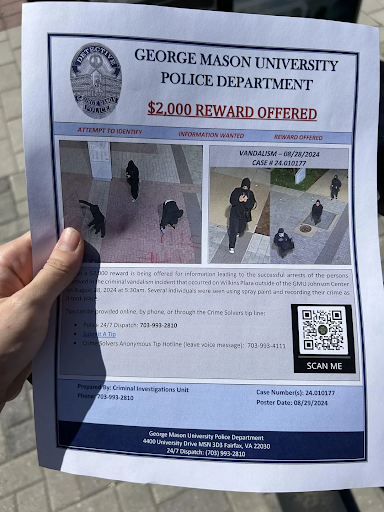
This is not the first report of property damage in a similar nature. On Aug. 28 at 6:26 a.m., Mason PD reported a case of vandalism of property at Wilkins Plaza. According to August’s daily crime and fire log, Mason filed a complaint reporting “graffiti” with status pending as of Aug. 28.
Mason PD issued a $2,000 reward offer “for information leading to the successful arrests of the persons involved in the criminal vandalism incident that occurred on Wilkins Plaza outside of the GMU Johnson Center on August 28, 2024 at 5:30am.” This offer is higher than their Crime Solvers Tips submission where “information reported to the police that leads to an arrest may be eligible for a reward of up to $1,000.”
Anonymous photo submission
On Aug. 30, the gmuintifada Instagram page posted a video of allegedly said report taking place with the following caption:
“We the George Mason University students of conscience, bear witness to the atrocities funded and supplied by our university, and we have chosen to retaliate. During the early hours of Wednesday morning, autonomous students left the imperial George Mason University a message: that the student intifada has been reignited, and that we will honor all the Gazan martyrs who did not live to witness this academic year. University’s administration’s across the nation have convinced themselves that they can suffocate the flames of resistance that have been unleashed since the inception of this genocide. Yet, what they fail to realize is that their every effort to stifle our voices and eradicate our movement for liberation has only provoked an inferno that will engulf all systems of oppression that are upholding the genocide of the steadfast and honorable Palestinians. George Mason University, you will NEVER be able to escape accountability for your role in this genocide. Gaza is our compass and the hear of our noble struggle and the Student Intifada will confront every dousing of our eternal flame of resistance with precision. We will never be extinguished. Resistance until victory, GMU Intifada #escalate4gaza #studentintifada”
As of Sept. 25, Mason PD is still investigating the incident.
Photo Courtesy of Chadwick Edralin
Mason student plays the accordion on Wilkins Plaza and spreads positivity through musicBY TANYA MALIK, STAFF WRITER
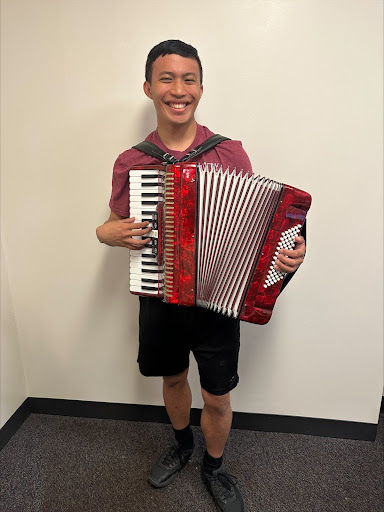
Junior Chadwick Edralin, a computer game design major, taught himself the accordion as a hobby when he chose to take a semester off at Mason back in 2022. Edralin was also encouraged by his friend group to play the accordion after seeing the instrument being used in video games.
“I bought the accordion while I was home from school, wanting to fill my time while away from school,” Edralin said. “I waited for a few weeks for it to come in and was so excited that when it finally arrived, I didn’t put it down for 6 hours the first day and practiced for about 4 hours a day—a large part of my day considering I was also working at the time.”
Edralin faced hurdles when practicing the instrument due to the layout of the treble and bass buttons. When he returned to school, he had to manage his school schedule along with his accordion practice. He overcame both challenges through consistent practice and time management skills.
While Edralin doesn’t specialize in any specific genre or style, he mostly plays songs from video games. “Kass’s Theme” from “The Legend of Zelda: Breath of the Wild” holds a special place in his heart as it shows him how memorable and iconic the instrument and its songs can be. Edralin also enjoys sea shanties like “The Wellerman,” as they also mix well with the accordion.
Playing throughout the Mason campus has allowed him to gain confidence when publicly performing in front of others. He initially started playing in some fields behind his dorm and outside of SUB 1, where people could hear him as they walked to class. As he gained more confidence, he began practicing on Wilkins Plaza. He enjoys the positive comments and compliments that students give him when he plays, as well as talking to them about their appreciation for the music.
Even after playing in public for many months, playing on stage was a whole different beast. One of his most memorable experiences was performing in Mason’s Got Talent during GMU’s Family Weekend last year. Edralin says he relishes the memory and will participate in the talent show again this year.
Edralin believes that learning an instrument should be fun and fulfilling and one should balance their life and their hobbies, as too much of either can be stressful. Progressing in an instrument takes time but it will always come with proper practice.
“I am really happy to talk to people who are interested when I’m playing and always enjoy teaching the specifics of how an accordion operates,” Edralin said. “When people tell me they are surprised that I have so few years of experience and that they appreciate listening to my performance, I feel really fulfilled because it makes me feel accomplished for what my goal is: simply playing as a hobby,” Edralin said.
Students can often find and listen to Edralin playing his accordion throughout the week on Wilkins Plaza.
Jamie Gholson/ Fourth Estate
Mason faces parking shortage as enrollment boomsBY JAMIE GHOLSON, STAFF WRITER
“George Mason prioritizes accepting new students but forgets to prioritize parking,” senior Kat Benson said. Benson, a commuter student, is one of many students who find themselves frustrated with Mason’s parking options.
In an email interview, the director of Parking and Transportation at Mason Joshua Cantor said that Mason accepted 40,000 students in the 2023-2024 calendar year. Of the 40,000 students, roughly 34,000 are commuters at the Mason Fairfax campus.
Mason recently announced that they have accepted the largest freshman class in school history with 4,600 new students joining the Fall 2024 semester. Mason also announced the largest incoming undergraduate class with more than 7,600 students. Every year comes with an increase in students; however, the lack of lot expansion may lead to an even more frustrating commute.
Many commuter students at Mason have expressed that parking on the Fairfax campus has been a persistent problem. Complaints range from the price of parking permits to lot capacity.
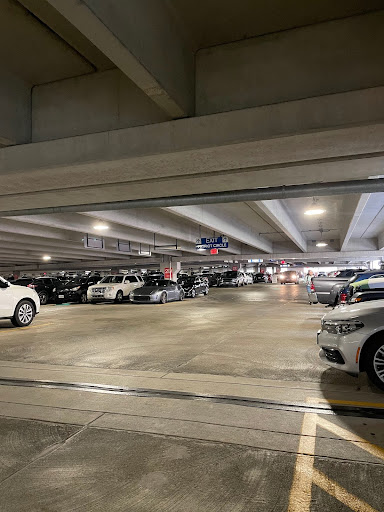
According to the Lot Count 2023, the Fairfax campus has a total of 12,431 parking spaces, with less than half of the spots designated for general parking. Rappahannock Deck, Lot A and Lot K account for 3,271 of the total 5,906 general parking spaces.
“You know exactly how many spaces there are, but what you don’t know is every student’s parking schedule,” said junior Libby Bondi.
In the spring semester of her freshman year, Bondi experienced a car crash in one of Mason’s parking lots. She said that students, “scramble to find the quickest spots because they know they’re so limited.”
“I’ve heard that some students walk across campus, show up an hour early for parking, circle the parking lot for 30 minutes or sometimes even skip class due to no parking spots. I just find that ridiculous,” senior Emma Paskey said.
In addition to a scarce amount of space, some students worry that the parking spaces are too small.
“[Students] run into spots too small and their side mirrors scratch the other cars,” Bondi said. She also often finds students speeding into the small parking spots, which can result in cars parking in multiple spaces or damaging the cars beside them.
Cantor said that students may perceive the spaces to be small, but they are traditionally 8.5’x18’, a requirement from Fairfax County, Virginia.
Some students addressed the price of parking permits, expressing that the costs are too high given the lack of space.
After paying $80 per semester at Delaware Valley University before transferring, Benson said they find the parking rates at Mason “surprising.”
Mason’s cheapest parking pass is $120 per semester on West Campus, which is a 30-minute walk to Fairfax’s main campus. Mason’s general parking pass covers nine lots and is the second most expensive at $280 per semester. Mason Pond, one of Mason’s parking decks, is the most expensive at $450 per semester covering six lots on campus. According to Cantor, Mason earns $5 million per semester in parking passes.
Benson expressed that finding a parking spot can infuriate them and lead to emotional distress when trying to get to class on time. This frustration has led Benson to make difficult choices when figuring out where to park. In a pinch, Benson has had to park in the 30-minute parking spots, which has led to receiving tickets between $35 to $50, causing an additional financial hit.
Mason has tried to lessen the financial impact by offering a trade-in for parking tickets through the Patriot Pack Out Donation Drive. Every year, students can donate food or personal hygiene items to Mason’s Patriot Pantry equivalent to their parking citations.
Some students perceive the Patriot Pantry incentive as Mason being greedy. “I think it’s a money grab,” Paskey said.
Cantor said the department of Parking and Transportation receives 5 million in student fee allocation as an auxiliary service, while the rest of their revenue comes from parking. “$12 [million] roughly in permit revenue, $3 [million] in visitor/event revenue, $700,000 in citation revenue (only $3.5% of our budget)…Overall our budget is around $20 [million] annually.”
Cantor said these funds are spent toward providing various services for Mason students such as shuttle operations, garage repair maintenance and other parking operations through their operator, SP+. Despite their profits, students still feel that there is still a lack of sufficient parking throughout campus.
Benson, Bondi and Paskey suggested solutions for Mason’s parking issue. Benson suggested including building parking lots on the east side of campus or turning one of the premium parking lots into general parking. Bondi’s solution involved increasing the general parking zone in Rappahannock Deck. Paskey proposed that more signs should be created in the parking lots, the lines should be repaved and parking spaces should be made bigger.
Mason Student Government made an Instagram post about the future goals for Mason parking. This includes monthly payment plans for parking passes, applying financial aid and scholarships to parking passes, and installing more security cameras in the campus parking lots.
Adding secure measures may transform Mason’s parking and alleviate some of the students’ concerns.
Andani Munkaila/ Fourth Estate
Patriots pop out for free protein shakesBY ANDANI MUNKAILA, SOCIAL MEDIA AND GRAPHICS EDITOR
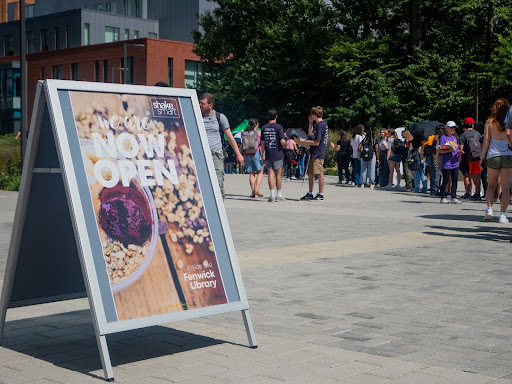
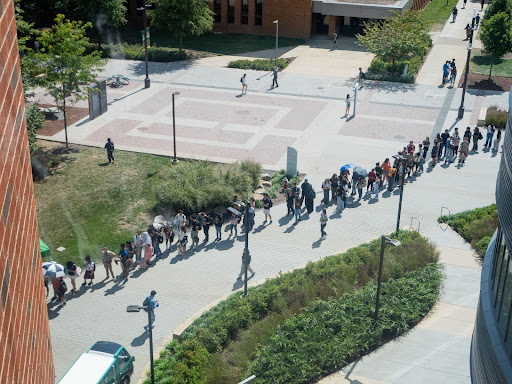
On Thursday, Sept. 12, lines wrapped around Wilkins Plaza as hundreds waited to receive their free protein shake from Mason’s newest dining spot, Shake Smart, celebrating their grand opening in Fenwick Library.
By 11:15 a.m., the line for Shake Smart had grown to 822 people, stretching into Wilkins Plaza, as reported by Sophia Nelson, a marketing manager for Sodexo.
Nelson noted the competitive atmosphere among different Shake Smart locations and expressed optimism that Mason would exceed Florida State University’s record turnout of 1,800 people set in 2021. The Mason location ultimately came short of that number, reporting a turnout of 1,783 people, according to Nelson.
“Shake Smart is designed to give students a healthy option on campus,” Nelson said. “Most of their protein shakes contain protein powder, fresh fruits and vegetables. It’s a great one-stop place to get your fix.”
Shake Smart, created by Kevin Gelfand and Martin Reiman, aims to provide health-focused meals for college students. Founded in 2011, Shake Smart plans to open new stores on campuses across the nation.
Andani Munkaila/ Fourth Estate
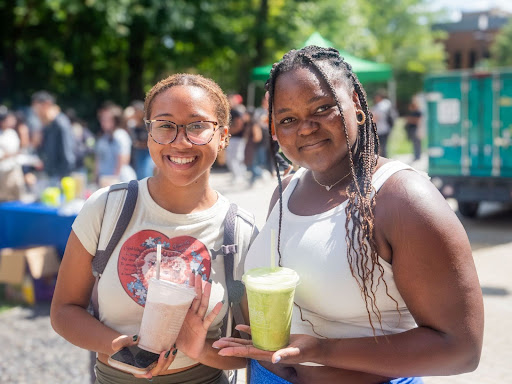
Juniors Sydney Carver and Jenifer Zhandira claimed to have waited an hour and a half to get their free protein shakes. Other patrons reported waits as long as an hour and forty minutes. After receiving their “Green to Go” and “Banana Chocolate Strawberry” protein shakes, respectively, the pair shared their thoughts.
“Mine is actually really good,” Carver said.
Both Zhandira and Carver expressed excitement about the new spot. When asked if they would return, they responded enthusiastically, “absolutely.”
Andani Munkaila/ Fourth Estate
This sentiment seemed to be shared by other students, with some noting that their protein shakes exceeded their expectations.
Shake Smart, which can be found at the front entrance lobby of Fenwick Library, is open from 8 a.m. to 7 p.m. Monday through Thursday and from 8 a.m. to 5 p.m. on Fridays.
Photo Courtesy of Jawad Hosseini
BY JAWAD HOSSEINI, OPINION SUBMISSION
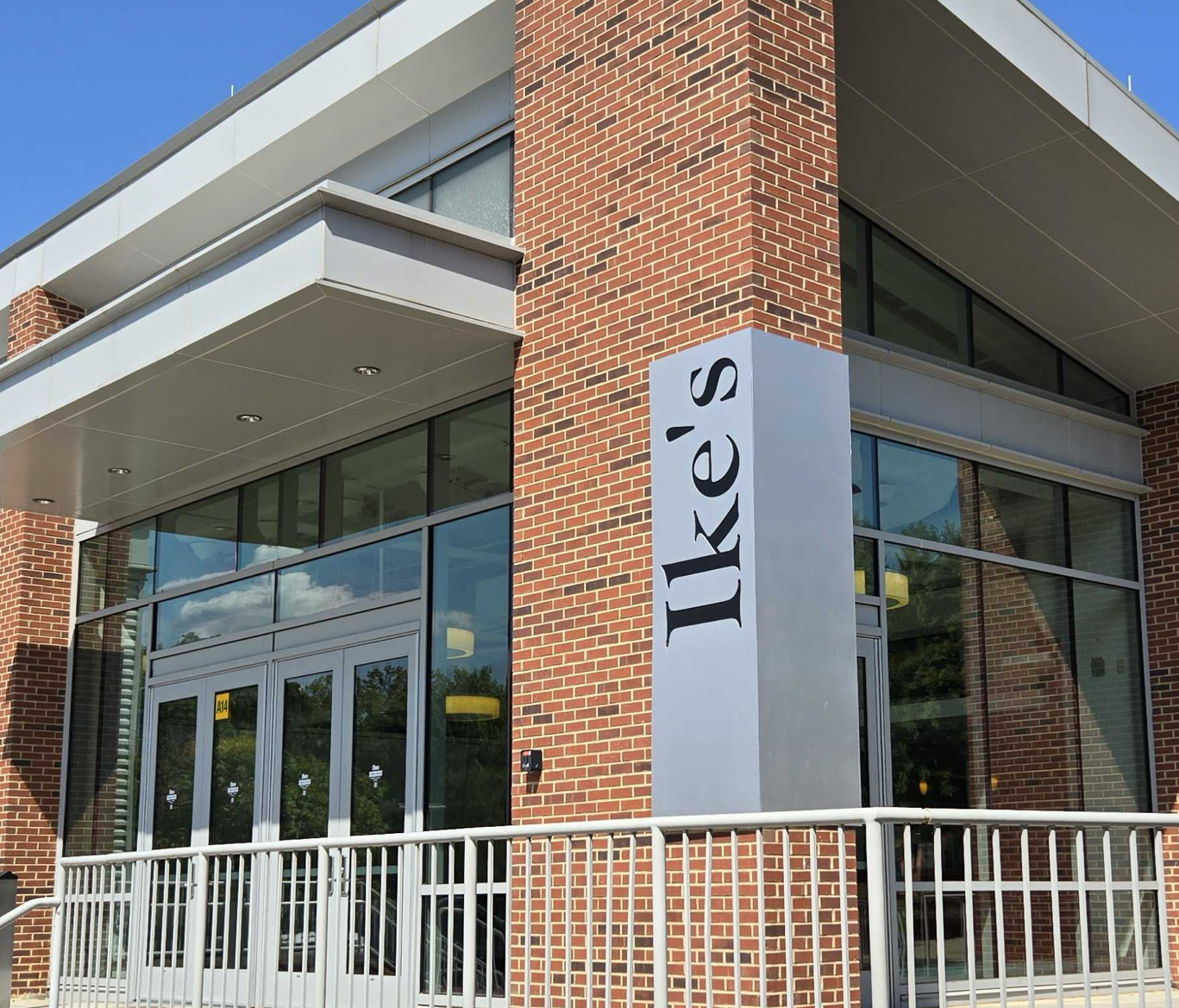
In his 1942 masterpiece, “Nighthawks,” Edward Hopper paints a New York diner open late at night where a lonely man is sitting by himself, a couple is silently contemplating in the corner and a busy waiter is looking lost. If you visit Mason’s only 24/7 dining hall after midnight, you might run into similar characters.
Like Hopper’s painting, the multipurpose room at Ike’s is often a refuge to find much-needed solitude when students feel overwhelmed and crave comfort food. Yet unlike “Nighthawks,” Ike’s also has a larger communal space that serves as a hub for the Mason community to come together and enjoy each other’s company.
Mason’s late-night customs at Ike’s include running into friends while waiting in line for the famed cheeseburger, nodding to acknowledge those sitting around you whom you do not know by name but recognize as the usual late-night suspects and seeing the early morning risers – often athletes or D.C. interns – grabbing a bite before heading to their destinations.
But despite Ike’s major contributions to fostering a vibrant community at Mason, some efficiency concerns emerged last semester that threatened its 24/7 status. In response, the Student Government passed a resolution to express its support for preserving Ike’s 24/7 status.
Through constructive engagements with all stakeholders, Student Government members ultimately convinced administrators to continue keeping Ike’s open 24/7 this academic year.
In Culinary Council meetings, the company that runs the dining halls raised concerns about not seeing enough people swiping into Ike’s in the later hours. The dining team worried about the operational costs of keeping open a dining hall that gets used below its capacity. While there are legitimate worries about cost-effectiveness, swipe numbers fail to reflect that students often stay at Ike’s for long hours when they visit after midnight.
In recent months, new vending machines have coincidentally popped up around campus offering small “hot meals” at high prices. Some fear that these machines are seen as a potential cost-effective alternative to a 24/7 Ike’s; however, vending machines should neither replace the welcoming atmosphere that Ike’s offers nor can they match the freedom that comes with “all you care to eat” options.
Residential students who rely on meal plans often complain about the quality of food at the dining halls, the lack of enough variety and the occasional inaccurate nutritional information. Nevertheless, a 24/7 dining hall is one of the main reasons that convinced students like me to keep our meal plan despite the dining halls’ shortcomings.
As Mason attempts to transform its reputation as a “commuter school” into a campus known for its vibrant residential life, strengthening community spaces like Ike’s should be central to that strategy. But vending machines replacing human interactions at Ike’s would contradict those goals by encouraging isolation, making living on campus less attractive.
Ultimately, a 24/7 Ike’s has become a Mason institution that is worth keeping alive as a part of our living traditions rather than just another period in our history. While it has been decades since Hopper painted “Nighthawks,” his fans are still searching for the mysterious New York diner depicted in the painting, developing various theories about its location. Future freshman classes at Mason should not be condemned to the same historical ambiguity, left wondering what it would be like to have a 24/7 dining hall.
Future Mason students deserve to experience what I, along with many of my friends, were privileged enough to experience: the opportunity to create endless memories over late-night dinners as we navigated our early days of adulthood.
Graphic by Madalyn Godfrey
Both Democrats and Republicans claim to have solutions to the housing crisis—but neither is willing to confront the elephant in the room: our broken system of land ownership.
BY GAVIN MIDDLETON, OPINION SUBMISSION
Housing disparities will only worsen unless we stop taxing individuals and start taxing land. The Republican and Democratic parties rely on outdated ideas that homeownership is generally feasible or that nativism would solve supply constraints. These beliefs fail to address the root problems contributing to the property affordability gap: land speculation and monopolization.
Land value taxation (LVT) is a viable option to unlock housing affordability and economic fairness, which neither Donald Trump nor Kamala Harris fully comprehends.
Harris’ proposal to build 3 million homes neglects a critical issue: land speculation.
While increasing housing supply can lower prices, the U.S. already has a 10.4% home vacancy rate, with 15.1 million vacant homes as land speculation investments—proof her plan ignores the real issue.
The tax credit premise has merit but land-related issues, such as high rent, loans and house costs, restrict young people from becoming homeowners. External factors, such as student loan debt, further complicate this problem.
The issue with rent limitations is that they do not address the already high prices across the market. According to the U.S. Department of Treasury, since 2000, median rent has risen more than 20% and 30% of median income is required to pay the average rent. A complete approach targeting housing and rent is required. Not superficial or temporary measures. Democrats aren’t the only ones ignoring the land issue.
On the other side, Republicans are equally out of touch with the core issue; Trump has no real strategy to address the housing crisis. He believes he can increase purchases by lowering the interest rates and immigration control. Immigration is a time-tested scapegoat for Trump’s administration and fails to address the supply issue.
Opening up federal lands for development misses the crux of the problem: the concentrated ownership of valuable urban land and speculative practices that inflate prices.
A Georgist solution, such as LVT, would directly tackle these issues by making land more available and ensuring its productive use.
Both candidates overlook that housing affordability is not just about supply and demand—it’s about land. In urban areas, land value is inflated by speculation and monopolization.
In 1879, economist Henry George proposed the LVT, a progressive tax on the unimproved value of land, considering only its location, not any structures on it. LVT discourages land hoarding, promotes urban development and consolidates urban spaces. It’s an efficient tax that doesn’t penalize workers or investors but curbs rent-seeking and accumulating wealth without contributing to productivity or benefiting society.
But does it work?
LVT isn’t theoretical. With Georgism-inspired policies, Singapore and Taiwan optimized land use curbed speculation and boosted economic growth and affordable housing. In Singapore, nearly 80% of the population benefits from accessible public housing, reducing homelessness significantly.
Beyond land reform, Georgism’s potential includes funding Universal Basic Income (UBI) through land taxes, which could reduce burdens on homebuyers, boost productivity and unlock millions of underutilized acres for a more affordable future.
It’s time our candidates stopped ignoring the root causes of the housing crisis. Instead of temporary fixes and political distractions, we need a bold solution that addresses land monopoly.
George offers a clear, actionable path forward. Write to your member of Congress: “If we want a genuinely affordable housing market, it’s time to tax land, not people.”
Fourth Estate/Sarena Marrisa Sohan
A conversation with Canadian band, The Free LabelBY SARENA MARRISA SOHAN, STAFF WRITER
Editor’s Note: This interview was initially conducted on April 26, 2024, at Mason Day. Interview edited for length and clarity.
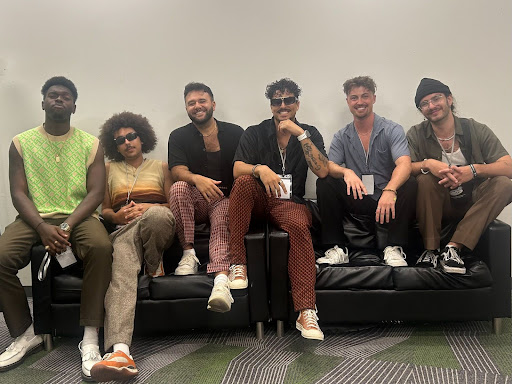
The opener for Mason Day 2024 was Canadian band The Free Label. The band comprises musicians Josh Daniel, Malik Mungo, Jacob Thompson, Mathew Fantini, Cole Mendez and Jason Martin. The band’s ability to seamlessly blend genres and incorporate old school elements in their music contributes to their unique sound. Prior to the band’s vibrant performance at Mason Day, I met with them to learn more about their story.
Why do you call yourselves The Free Label?
Fantini: The Free Label really came from when we started the band. We didn’t really want to contain ourselves in one genre. We really wanted to flow through all our influences and put all that into work that we did. And it slowly became that we just didn’t want to be contained by any label. We are completely independent but it really just came from not wanting to be labeled as any genre.
Currently you lean more towards disco and R&B. How did that come about?
Daniel: For the disco and R&B genre, what we did is for the past years we’ve been writing a lot of different styles of music…and we started to notice that a lot of our sound was going toward this disco area while keeping the styles of R&B… so we’re like, ‘let’s mash those two and see how it feels’ and it led to that.
What is your creative process like?
Martin: Our creative process is very different depending on what we’re doing. We all produce and do beatmaking. So someone will write and have an idea and make “the bones” of something and bring it into the band. Then we’ll all put our own little flavors and flairs onto it and work together to make it something special and something that means something to all of us. And then sometimes we sit down and we’re all in a room together and we write something completely brand new and just jam an idea.
“Real Love” has to be my favorite song from you. What is the story behind it?
Mendez: That was our first venture into the disco thing.
Daniel: Yeah, that’s the first transition song that we were trying to test the waters with disco and R&B. It’s got a lot of R&B melodies on it while the chorus is like super disco. And we worked with our friend, Aaron Paris, who’s done some crazy stuff. He put live strings all over it and brought it all together.
Mendez: We wanted to do a longer format thing where you hear the first chorus, and the middle section goes [to] a whole different chorus and that’s something that used to happen a lot more in the 70s and 80s. You don’t hear that form as much and so that was something we were trying to bring back.
Daniel: I think the length of the song is a longer song traditionally from pop and we wanted that cause it’s more something to dance to. You can pop it onto a roller-skating rink and dance to it. That’s the vibe I feel like it gives.
What do you hope people gain from listening to your music?
Mungo: Happiness, being inspired. Just a better sense of life and just love for music.
Daniel: Someone just commented on our post saying ‘I was just listening to your song and it gave me hope.’ That’s what we’re trying to do, we’re trying to spread that good feeling energy. There’s a lot of sad things going on and we’re trying to take you outside of really thinking about anything and just feeling good, enjoying yourself.
Mungo: The energy never lies whenever we’re on stage. We’re always having fun and so when people can vibe off of that and they end up having fun, that’s more than we can ever ask for.
What advice do you have for someone wanting to make music?
Fantini: The best advice is to start and don’t stop. I think that’s the only thing that you can do if you want to make and release music. You have to write the music, finish it and release it. And then, after you finish that song, you’ll realize that you can do much better and you write and release another song and you realize you can still get better than that.
Mendez: We’re all guilty of starting things and not finishing them. I feel like you only actually complete the learning process by finishing something. There’s no rules to music. You know, I think you got to be really honest with yourself and develop your taste first. And get that by listening to a lot of different music and being critical about other people’s music and your own music.
Martin: I also think you got to be okay with being bad at something or making something bad. And you know, trying to learn from that process because none of us started out being amazing musicians. Like I sounded terrible when I first started playing the drums. You got to be okay with that and be able to work through that.
If you missed the performance on Mason Day, those interested in listening to their music should check out The Free Label on all streaming platforms.
Fourth Estate/Nawaal Nackerdien
Fourth Estate news editor shares plan and hopes for the fall 2024 semesterBY NAWAAL NACKERDIEN, NEWS EDITOR
Hello everyone,
My name is Nawaal Nackerdien and I am Fourth Estate’s news editor for the Fall 2024 semester. I’m originally from South Africa and am majoring in Creative Writing with a minor in Technical Writing.
Fourth Estate can serve as a link of public trust between campus and students. This semester, I want to support and improve our community. Establishing a strong connection is one step. I want the Mason community to feel that they can rely on Fourth Estate to update them on campus life.
I am excited to be the news editor for this semester. Through working with student writers and the Mason community, I will be able to help others and myself grow in our campus careers. In my position, I will share unbiased stories that are truthful and accurate. I plan to hold the utmost integrity in editing and publishing writers’ works.
If there is anything you would like to cover, Fourth Estate is welcoming to all writers with any type of experience. We have capable staff in multiple positions willing to help you improve and have your work published.
Students interested in joining Fourth Estate should email us at eic@gmufourthestate.com. If you have an interest in writing news related content on campus, please reach out to my email provided below.
Sincerely,
Nawaal Nackerdien
Fourth Estate/Brandyn Fragosa
The Mason community reacts to the 2024 presidential debate.BY BRANDYN FRAGOSA, SENIOR NEWS REPORTER
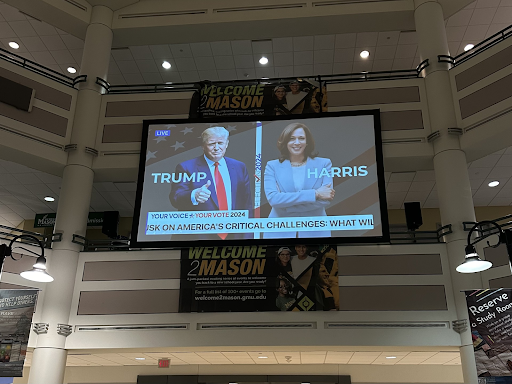
Mason Votes hosted their 2024 Presidential Debate Watch Party for the Mason community at the entrance of the Johnson Center Atrium on Sept. 10. The watch party showcased the first debate between candidates Vice President Kamala Harris and former President Donald Trump on topics concerning the American public.
The community event was facilitated by Mason Votes Advisor Alissa Karton who established the organization in 2007 alongside other Mason students, faculty and staff to “create a university-wide umbrella organization… promoting information around voting and elections.”
Since 2007, the tradition of hosting a presidential debate watch party has allowed members of the Mason community to get involved in the upcoming elections and learn more about the candidates and their stances.
With only 55 days left until Election Day, a large crowd gathered in the JC Atrium to watch candidates Vice President Kamala Harris and former President Donald J Trump debate each other for the first time.
The debate was filmed live and hosted by ABC at the National Constitution Center in Philadelphia, Pennsylvania. The debate was moderated by David Muir, anchor and managing editor for ABC World News Tonight, and Linsey Davis, anchor for World News Tonight Sunday and ABC News Live Prime.
The moderators asked each candidate topics regarding the economy, abortion, immigration and border security, environment, foreign affairs, health care and climate change with each candidate having “two-minute answers to questions, two-minute rebuttals, and one extra minute for follow-ups, clarifications, or responses,” as stated in the debate rules.
During the 90-minute debate, community members cheered, laughed and groaned as the candidates answered questions and critiqued each other’s time in office.
Among the students watching the debate was Vice President of the College Republicans at GMU senior Jay Shuey, who shared his concern over the lack of questions regarding constitutional rights.
“The one thing that kind of made me a bit concerned was the lack of talk about constitutional rights,” Shuey said. “There was no talk about freedom of speech on college campuses, there was no talk about the Second Amendment… what are you going to do about the Fourth Amendment, are you going to do anything about government spying… these debates are never long enough… we could ask questions about every constitutional amendment and what their thoughts are on them because if they don’t have an answer to that, then it’s like ok, that may be an issue.
“Let’s talk about Bruen [New York State Rifle & Pistol Association v. Bruen], how that affects everybody because we just had a school shooting last week, why aren’t we talking about that,” Shuey added.
When it came to the candidate’s ability to answer questions, senior Emilee Brewer said, “Overall, I think sometimes there were moments when each candidate did not directly answer a question, but more in generalizations. The candidates spent more time on the blame game than proposing a plan to move forward.
Given this election is looking to pull in higher young voter numbers, I think it would have been beneficial for more in-depth conversations related to the future of this country and the current everyday struggles faced today,” Brewer said. “Where do the candidates stand on policy on gas and grocery prices, campus protesting, social security, tax on tips, etc.? A topic I would have liked covered was voter identification and where each of the candidates stand on that.”
Despite her concerns, Brewer still plans to vote in the upcoming 2024 election.
“It is so important to vote, especially young adults like myself,” Brewer said. “I want my voice heard this November, as should anyone else.”
As attendees left the JC atrium following the candidates’ closing statements, Karton said, “I hope that [the Mason community has] some clarity and motivation on getting engaged… I hope they get awareness and education and I hope they can have good conversations with their peers.”
To learn more about ways to get involved with the upcoming election, visit masonvotes.gmu.edu for voter guides and information on becoming a registered voter.
“I think if you are able to vote, personally, I think it’s important to exercise that right,” Karton said. “If people fought long and hard to give us that right to vote, I see it as a civic responsibility.”
Viviana Smith/Fourth Estate
The two editor-in-chiefs for the Fall 2024 semester express hopes and ambitions for the upcoming academic yearBY VIVIANA SMITH AND GABRIEL KING, EDITORS-IN-CHIEF
This fall 2024 semester, seniors Gabriel King and Viviana Smith will serve alongside one another as co-editors-in-chief. Both communication majors with a focus on journalism, King and Smith have a background and a passion for journalism.
Stated in a presentation featured during Fourth Estate’s editor-in-chief election process, they hope to “rebuild Fourth Estate on a strong foundation of trust, confidence and high integrity.”
Both editors hope to build upon what they’ve learned throughout their time with Fourth Estate and Mason’s Office of Student Media, wishing to produce quality content for the student-run newspaper. Another key goal is to expose students to more opportunities to hone their journalism skills, no matter their major or study focus.
This semester, King and Smith wish to develop a welcoming and honest community through the newspaper, inviting writers and readers alike to share stories, express their opinions and be a part of campus history.
To further express their individual experiences and hopes for the future, personal statements from King and Smith are provided below.
Students looking to get involved with Fourth Estate may contact the newsroom, or visit us in the Student Media office located at the lowest level in The Hub (adjacent to the mailroom). For general inquiries, comments and questions, email eic@gmufourthestate.com.
Photo courtesy of Benson Park Photography
Hi everyone!
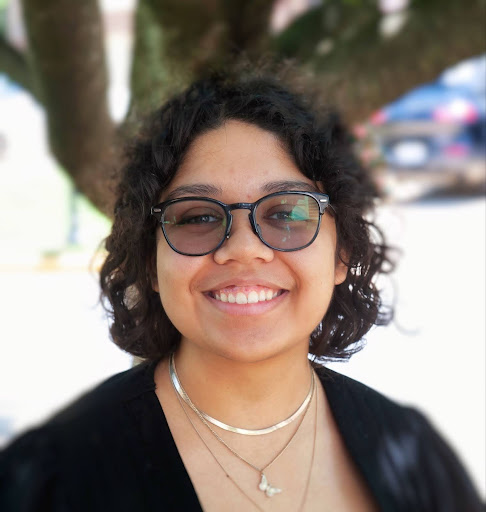
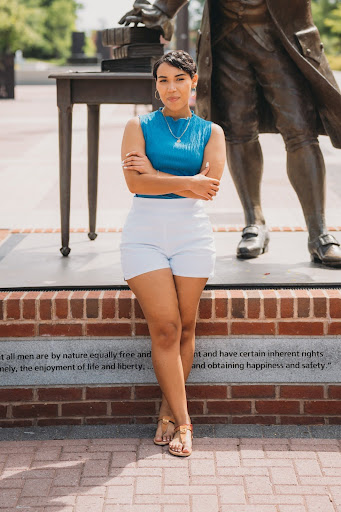
My name is Viviana Smith, and I am delighted to serve as co-editor-in-chief of Fourth Estate this semester.
As I am in my senior year, I reflect on all the time I’ve spent at Mason studying journalism and gaining a lot of experience through our student-run newspaper. I began as a staff writer, covering short and informative pieces. I worked my way up to news editor, then managing editor, and now I am an editor-in-chief. This new role is something I hoped for when I began writing for Fourth Estate but never truly anticipated.
Throughout my time with the paper, I’ve learned how important it is to hear people’s voices and share their stories. We can gain from one another if we take the time to seek out information, especially when someone else has a different perspective than our own.
Words have a lot of power– they’ve made us laugh, cry, become angry and brought us peace. I enjoy being a part of the process that brings forth these emotions through powerful words. I hope to encourage incoming and prospective journalists to become powerful storytellers and connect communities through their words.
Working alongside Gabe King, I know we will do our best to foster an environment that encourages growth for our writers, the Mason community and ourselves. I can’t wait to see how Fourth Estate develops over the next few months. Hopefully, the newspaper can leave an incredible impact.
Best,
Viviana Smith
vsmith26@gmu.edu
Gabriel King/Fourth Estate
Hello everyone!
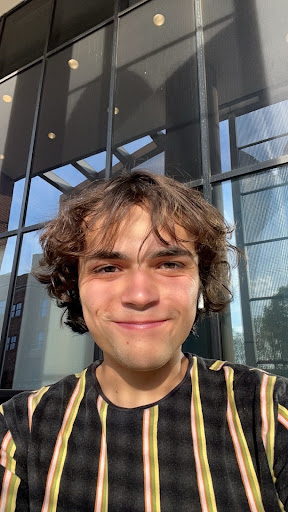
I am Gabe King, co-editor-in-Chief for Fourth Estate this semester! I am excited to fill this role and continue to provide the Mason community with strong student journalism.
As I begin my final semester here, I aim to continue growing as a writer and editor. When I started with Fourth Estate, I was a staff writer before becoming sports editor last year. One of the qualities I value most when reporting is authenticity. This semester, we will seek to provide the George Mason community with authentic journalism, cover what is important to the students and continue to develop further into truth and accuracy.
In the past, Fourth Estate has been an outlet for students and the George Mason community to learn about the news that affects them. We will strive to amplify this aspect of our outlet, as it is imperative for the community to be informed.
I am excited for what the future holds for Fourth Estate. Together, Viviana and I will aim to continue Fourth Estate’s growth with our team of talented editors and writers. An exciting Fall 2024 semester awaits, and we hope you will join us on this new journey!
Best,
Gabe King
gking8@gmu.edu